Practical HCC Coding Examples and Compliance Impact (2026)
Understand the importance of HCC coding for risk adjustment and compliance. Explore best practices and examples to improve coding accuracy and avoid errors.
Ayeesha Siddiqua
Lead Coder · RapidClaims
Published March 13, 2026Updated June 5, 2026
Accurate HCC coding is crucial to maintaining a healthy revenue cycle and avoiding costly denials. With each misstep in coding, healthcare providers risk underpayments, compliance violations, and prolonged claim processing.
Healthcare organizations face constant pressure to stay compliant with shifting regulations while optimizing reimbursements. Without precise coding, even the most well-documented cases can lead to payment delays or audits.
In this article, you'll explore practical examples of HCC coding, highlight common errors that impact compliance and reimbursement, and offer actionable insights for improving your coding accuracy to prevent costly mistakes.
Overview
HCC coding is essential for risk adjustment and compliance in healthcare.
Accurate coding of conditions like diabetes, kidney disease, heart failure, and cancer is critical for proper reimbursement.
Inaccurate coding can lead to claim denials, audits, and financial penalties.
Best practices include thorough documentation, regular training, and staying updated with CMS guidelines.
AI tools and real-time validation improve coding accuracy and reduce manual errors.
Practical Applications of HCC Coding: Key Examples and Their Implications
8 Effective Best Practices for Accurate HCC Coding
How RapidClaims Supports HCC Coding Accuracy and Compliance?
Final Thoughts
FAQs
What is HCC Coding?
HCC coding (Hierarchical Condition Category coding) is a method used to categorize patients based on the severity of their medical conditions to adjust healthcare provider payments. This system is crucial in Medicare Advantage plans and risk-based reimbursement models, where patient risk is assessed to determine funding levels.
Proper HCC coding captures the complexity of a patient's health status, directly affecting reimbursement accuracy and compliance with CMS guidelines.
The importance of correctly applying HCC codes becomes clear when considering their impact on the financial health of healthcare organizations, especially in value-based care environments.
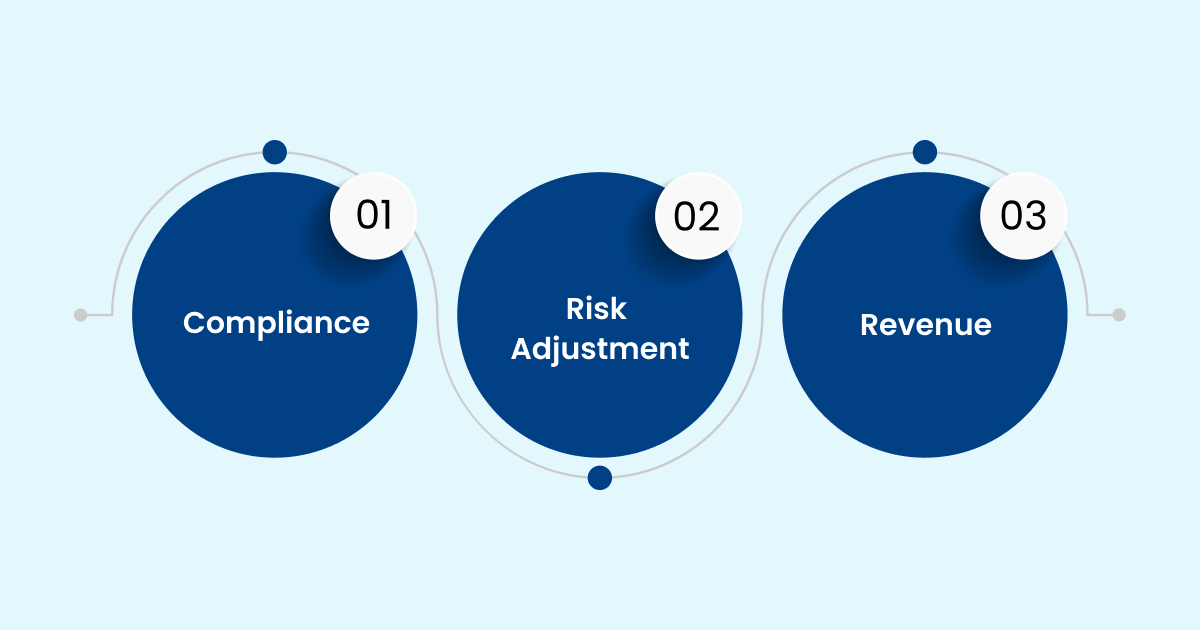
HCC coding is vital for ensuring healthcare organizations meet regulatory standards, optimize patient care reimbursements, and maintain financial viability in risk-based payment models.
1. Compliance
Inaccurate coding can expose healthcare organizations to audits, financial penalties, and compliance risks.
This directly impacts compliance in several key areas:
CMS and HIPAA Compliance: Proper coding ensures healthcare organizations follow CMS guidelines and HIPAA standards, preventing non-compliance issues that can arise from incorrect diagnosis capture.
Audit Preparedness: Inaccurate HCC coding increases the likelihood of audits, putting providers at risk of financial penalties or even fraud allegations.
Regulatory Adaptation: The constant updates in CMS HCC coding guidelines require healthcare providers to stay vigilant and adapt coding practices accordingly to remain compliant.
2. Risk Adjustment
Accurate HCC coding is crucial for reflecting a patient's true health complexity, impacting Risk Adjustment Factor (RAF) scores.
Key aspects of risk adjustment impacted by HCC coding include:
Impact on RAF Scores: Proper HCC coding ensures that risk scores are accurately represented, aligning funding with patient care needs, especially for those with chronic or complex conditions.
Underreporting Risk: Failing to code all relevant conditions leads to inaccurate RAF scores, resulting in reduced reimbursement for providers serving high-risk populations.
Care Management Efficiency: Accurate risk adjustment enables healthcare organizations to allocate resources based on the true risk profiles of patients, improving care planning and management.
3. Revenue
HCC coding directly influences reimbursement accuracy, ensuring healthcare providers are paid appropriately for the care they deliver. Errors in coding can significantly affect revenue, leading to underpayment or delayed claims.
The financial implications of HCC coding on revenue include:
Optimized Reimbursement: Correct coding ensures providers are reimbursed at appropriate levels for complex patient care, maximizing financial returns.
Revenue Loss Due to Inaccurate Coding: Errors in coding, whether under-coding or over-coding, can lead to delayed or reduced reimbursements, affecting cash flow.
Financial Sustainability: Accurate HCC coding supports stable and predictable revenue cycles, helping healthcare organizations maintain financial health over time.
Accurate HCC coding impacts compliance, risk adjustment, and revenue, all of which depend on proper diagnosis capture. Understanding the most common HCC codes is key to ensuring accurate coding.
Certain HCC codes are critical for capturing the complexity of chronic conditions and ensuring accurate risk adjustment. Properly coding these conditions directly affects reimbursement and the accuracy of patient health assessments.
Here are some of the most common HCC codes and their applications:
HCC 18: Diabetes with Chronic Complications: Used for patients with diabetes and related complications, such as nephropathy or neuropathy, reflecting higher healthcare resource utilization.
HCC 139: Chronic Kidney Disease (Stage 3 or Higher): Applied to patients with advanced kidney disease, often associated with dialysis or intensive management.
HCC 85: Congestive Heart Failure: Used for patients with heart failure, indicating ongoing care needs and higher risk levels.
HCC 13: Malignant Cancer: Applied to various cancers, reflecting the need for intensive and long-term care.
HCC 111: Chronic Obstructive Pulmonary Disease (COPD): For patients with COPD, which often requires ongoing treatment and monitoring due to its chronic nature.
Accurately applying common HCC codes is essential for proper risk adjustment and reimbursement. However, understanding how these codes are used in practice can help avoid common errors and ensure compliance.
Practical Applications of HCC Coding: Key Examples and Their Implications
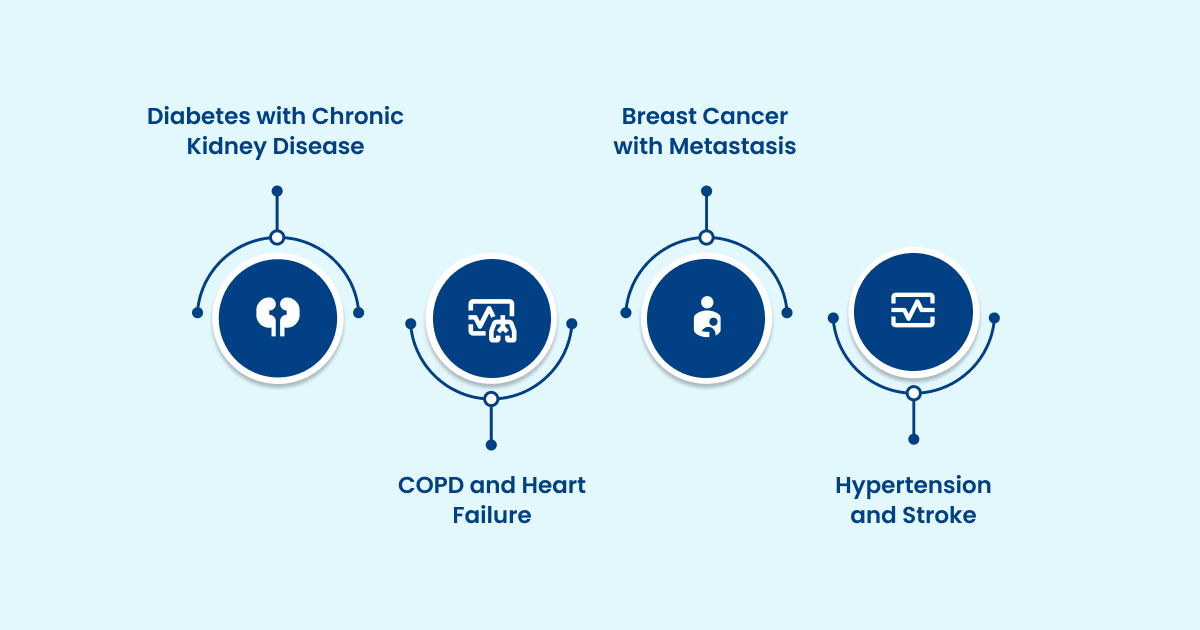
Applying HCC codes correctly is vital for accurate risk adjustment and reimbursement. Below are practical examples showing how common conditions are coded and how they impact financial and compliance outcomes.
Example 1: Diabetes with Chronic Kidney Disease (Stage 5)
Impact: Cancer cases often require intensive treatment, and coding both the primary and metastatic conditions ensures appropriate risk adjustment and care funding.
Impact: This combination of HCC codes reflects the complexity of managing hypertension alongside a history of stroke, requiring close monitoring and care.
Accurately capturing these conditions is key to ensuring healthcare organizations are reimbursed appropriately.
To ensure the best outcomes, it's essential to follow established best practices that reduce errors and improve coding accuracy.
8 Effective Best Practices for Accurate HCC Coding
Implementing the following best practices will help organizations improve their coding accuracy and compliance.
Here's a checklist for accurate HCC coding:
Thorough Documentation: Ensure all chronic conditions and related complications are clearly documented in the patient's record to support the assigned HCC codes.
Regular Training: Provide coders with ongoing education on the latest ICD-10, HCC, and CMS updates to ensure they stay current with changing coding standards.
Real-Time Code Validation: Implement AI-powered code validation tools that check codes against patient charts in real time to reduce human error and enhance coding efficiency.
Interdisciplinary Collaboration: Ensure coders, physicians, and compliance teams work together to verify that the documentation supports the selected codes, minimizing discrepancies.
Adopt CMS Updates Immediately: Review and integrate CMS changes as soon as they are released, including new codes, edits, and rules, to ensure up-to-date coding practices.
Use of AI Tools: Utilize AI tools like RapidClaims to automatically suggest appropriate HCC codes based on patient documentation. This helps reduce oversight, improve coding accuracy, and speed up the coding process.
Auditing and Quality Checks: Perform routine internal audits to identify coding errors and rectify them promptly, ensuring ongoing accuracy and compliance.
Accurate Risk Adjustment Mapping: Ensure that complex conditions are coded correctly to reflect the patient's full risk profile for accurate reimbursement.
Following these best practices will help healthcare organizations avoid common coding errors and improve reimbursement accuracy.
With the right processes in place, tools like RapidClaims can further improve HCC coding accuracy, simplify workflows and support compliance with minimal error.
By integrating RapidClaims, organizations can improve coding accuracy, reduce denials, and ensure compliance, ultimately boosting revenue and operational efficiency.
Final Thoughts
Accurate HCC coding is crucial for proper reimbursement, compliance, and reducing claim denials. Implementing best practices and AI tools helps streamline workflows and enhance coding precision.
RapidClaims provides AI-driven solutions like RapidCode, RapidCDI, and RapidScrub to automate HCC coding, ensuring high accuracy and compliance with minimal effort.
Want to see how RapidClaims can optimize your HCC coding? Schedule a Free Demo today and see the difference!
FAQs
1. What is the role of AI in improving HCC coding accuracy?
AI tools like RapidClaims analyze patient data in real-time, suggesting accurate codes and identifying documentation gaps. This reduces human error and increases coding efficiency.
2. How often do HCC coding guidelines change, and how can healthcare providers stay updated?
HCC coding guidelines are updated annually by CMS. Healthcare providers should regularly review CMS updates and use AI-driven tools that integrate the latest guidelines to ensure compliance.
3. Can AI tools help with coding complex medical conditions?
Yes, AI tools like RapidCode can assist in coding complex cases by analyzing detailed medical documentation and providing accurate code suggestions, enabling coders to focus on more intricate scenarios.
4. What are the main causes of claim denials in HCC coding, and how can they be avoided?
Common causes of denials include under-coding, over-coding, and incomplete documentation. Using AI tools to validate codes before submission can significantly reduce these errors and prevent denials.
5. How does HCC coding impact risk adjustment in Medicare Advantage plans?
HCC coding directly affects the Risk Adjustment Factor (RAF), which determines Medicare Advantage reimbursements. Accurate coding ensures providers receive appropriate funding for managing high-risk patients.
Get the next analysis in your inbox
The Revenue Cycle Briefing — operator-grade research, every other Wednesday. 12,400+ subscribers.
About the author
Ayeesha Siddiqua
Lead Coder · RapidClaims
Ayeesha Siddiqua is a highly experienced medical coding professional with 22 years of expertise in E/M Outpatient, Radiology, and Interventional Radiology (IVR), ensuring coding accuracy, regulatory compliance, and optimized reimbursements at RapidClaims.