

HIV testing remains a routine part of preventive and outpatient care, which increases the importance of accurate diagnosis coding. Even though the industry transitioned to ICD-10-CM, legacy ICD-9-CM claims are still subject to payer audits and compliance reviews.
According to the Centers for Disease Control and Prevention, approximately 1.2 million people in the United States are living with HIV, based on the latest 2025 surveillance update.
Higher screening volumes create greater exposure to coding errors. Misclassifying screening, asymptomatic HIV, or confirmed AIDS can result in denials, reimbursement discrepancies, and regulatory scrutiny. For revenue cycle teams, precise coding remains essential to protect both financial performance and compliance integrity.
Key Takeaways
- The correct ICD 9 CM code for HIV screening is V73.89, and it must only be used for asymptomatic preventive encounters.
- Misclassifying screening, asymptomatic HIV (V08), or AIDS (042) is a common cause of claim denials and audit exposure.
- Accurate sequencing and explicit provider documentation are critical for defensible billing under ICD-9-CM rules.
- Legacy ICD-9 claims remain subject to payer audits, making historical coding accuracy just as important as current submissions.
- AI-driven revenue cycle automation, such as RapidClaims, helps standardize validation, reduce coding variability, and strengthen claim readiness.
Why HIV Coding Errors Still Cause Claim Denials
HIV-related claims are often processed through automated payer logic that evaluates diagnosis validity and benefit eligibility.
Claims may be rejected when:
- The reported diagnosis does not match the clinical purpose of the visit
- The principal diagnosis conflicts with payer processing rules
- The laboratory service lacks valid diagnosis support
- Preventive benefit criteria are not satisfied
Because HIV testing intersects with preventive coverage and confirmed disease reporting, payer systems apply structured validation checks prior to adjudication.
Denials increase administrative handling time and require corrective billing actions.
Also Read: Claim Denials: Common Reasons and How to Effectively Resolve Them
Official ICD-9-CM Code for HIV Screening (V73.89 Explained)
Under ICD-9-CM, the correct diagnosis code for routine HIV screening is V73.89 – Special screening for other specified viral diseases.
This code is reported when:
- The patient is asymptomatic
- The encounter is preventive or risk-based screening
- There is no prior confirmed HIV diagnosis
V73.89 reflects testing performed to detect disease in a patient without signs or symptoms. It should not be used if HIV infection has already been diagnosed.
Proper Application in Claims
To code correctly:
- Confirm the provider documented the visit as screening.
- Verify absence of HIV-related symptoms.
- Assign V73.89 as the diagnosis code.
- Link it to the appropriate laboratory CPT code.
Accurate use of V73.89 supports preventive service billing and reduces the likelihood of payer edits for medical necessity mismatches.
ICD-9-CM Codes for HIV Infection and AIDS: 042 vs V08 and Sequencing Rules
Once HIV infection is confirmed, coding shifts from screening classification to disease status reporting. ICD-9-CM requires differentiation between asymptomatic HIV infection and confirmed HIV disease.
Core Diagnosis Codes
- 042 – Human immunodeficiency virus disease (AIDS)
- V08 – Asymptomatic HIV infection status
- 795.71 – Inconclusive HIV serology
When to Assign 042
Code 042 is used when the provider documents HIV disease, AIDS, or an AIDS-defining condition. Once assigned, 042 remains reportable in all future encounters.
If the visit is HIV-related:
- Sequence 042 as the principal diagnosis.
- Report related complications as secondary codes.
If the visit is unrelated:
- Report the unrelated condition first.
- List 042 as an additional diagnosis.
When to Assign V08
V08 applies when the patient is HIV-positive but has no documented AIDS-defining conditions. Sequencing depends on the reason for the encounter and whether HIV status is addressed during the visit.
Code selection and sequencing must follow explicit provider documentation. Laboratory results alone do not determine disease status classification.
Also Read: Key Updates in New CPT Code Set for 2026
Documentation Requirements for HIV Testing and Diagnosis
Accurate HIV coding depends on clear, specific provider documentation. Without sufficient detail in the medical record, even correctly selected codes may not withstand audit review.
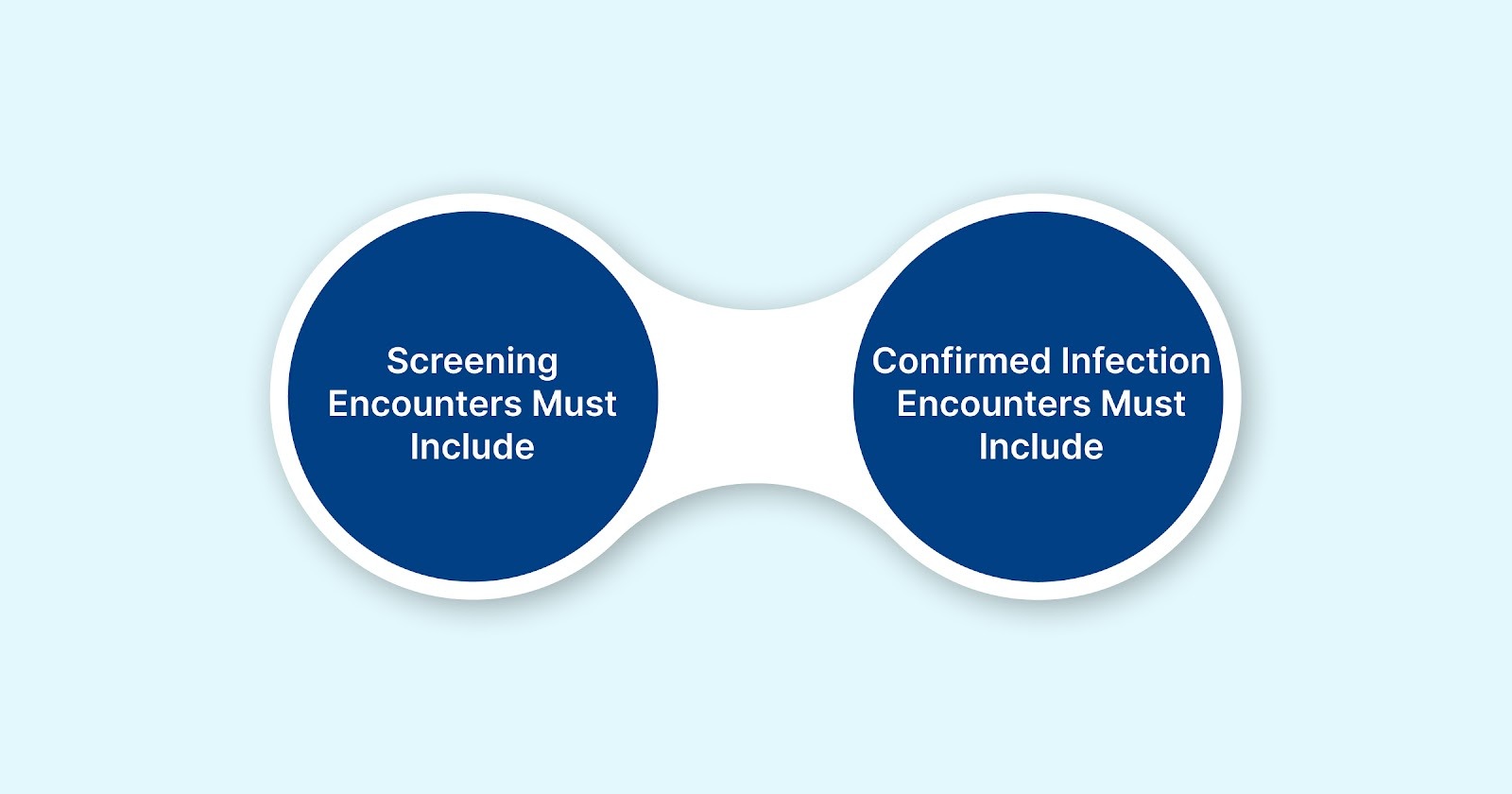
Screening Encounters Must Include
- Documentation of preventive or risk-based testing
- Confirmation of absence of symptoms
- Provider order for testing
- Identification of the laboratory service performed
Confirmed Infection Encounters Must Include
- Explicit provider diagnosis
- Clinical context of the condition
- Laboratory confirmation where applicable
- Documentation of associated conditions if addressed
Because HIV status is protected health information, records must also comply with HIPAA privacy standards and controlled access requirements.
Complete documentation supports defensible billing and accurate clinical reporting.
Also Read: Top 7 Strategies to Improve Clinical Documentation for 2026
Common Audit Triggers and OIG Risk Areas for HIV Claims
HIV-related claims receive heightened oversight due to diagnosis sensitivity, risk adjustment implications, and preventive service billing rules.
Audit Triggers That Increase Exposure
- Inconsistent reporting of disease status across encounters
- Unsupported asymptomatic status documentation
- Complications coded without sufficient clinical linkage
- Preventive services billed outside established eligibility guidelines
- Diagnosis patterns that influence risk-adjusted payment models
Audit findings may result in payment adjustments, corrective action plans, or extended monitoring periods.
Internal review processes help reduce multi-year compliance exposure.
Also Read: Healthcare Generative AI for Coding and Audit Review Workflows
Transitioning from ICD-9-CM to ICD-10-CM for HIV Coding
Although ICD-10-CM replaced ICD-9-CM, legacy HIV claims remain subject to retrospective audits and payer review. Appeals, compliance investigations, and historical data reconciliation often require accurate crosswalk alignment.
| ICD-9-CM | ICD-10-CM |
|---|---|
| V73.89 | Z11.4 |
| 042 | B20 |
| V08 | Z21 |
| 795.71 | R75 |
Improper crosswalk mapping during system upgrades or data migration can distort longitudinal reporting, affect risk-adjusted analytics, and create inconsistencies across EHR platforms.
Ensuring accurate historical alignment protects reporting integrity and strengthens audit defensibility.
Also Read: An Introduction to AI for Medical Coders
How AI Medical Coding Improves HIV Claim Accuracy
Manual coding requires interpretation of clinical notes, payer rules, and diagnosis hierarchy logic. As screening volume increases, maintaining uniform application of these rules across encounters becomes increasingly complex.
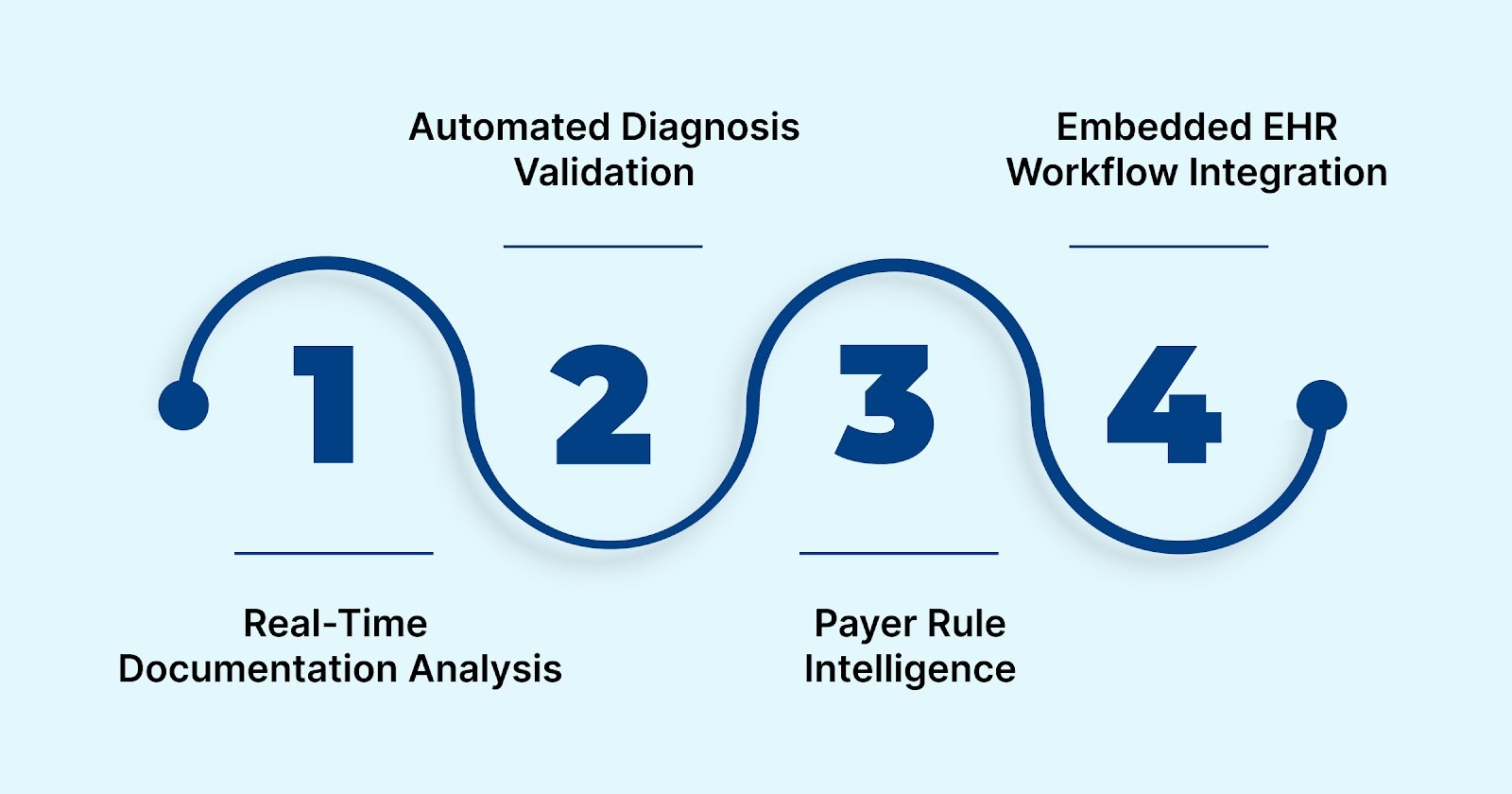
AI medical coding introduces structured pre-submission validation within the workflow.
Real-Time Documentation Analysis
Natural language processing reviews provider documentation to:
- Detect terminology indicating screening versus confirmed infection
- Identify unclear or conflicting clinical language
- Surface gaps that may require clarification
- Align documented intent with diagnosis selection
This allows inconsistencies to be addressed before coding finalization.
Automated Diagnosis Validation
AI engines apply structured coding logic to:
- Evaluate hierarchy placement of reported conditions
- Confirm compatibility between diagnoses and services billed
- Identify code combinations that conflict with established guidelines
Validation occurs at the chart level, reducing dependency on downstream edits.
Payer Rule Intelligence
Revenue cycle automation platforms incorporate configurable rule sets to:
- Apply preventive service eligibility parameters
- Align claims with adjudication logic
- Detect structural inconsistencies prior to submission
This creates a standardized validation layer across payer types.
Embedded EHR Workflow Integration
Through HL7 and FHIR-based integration, AI operates directly within existing clinical and billing systems.
This enables:
- Concurrent coding suggestions during documentation
- Pre-bill review checkpoints
- Structured audit trails for assigned codes
- Continuous rule updates without workflow disruption
AI functions as a validation framework embedded inside the coding lifecycle rather than as a reactive correction tool.
Explore how RapidClaims can support structured HIV coding accuracy across your revenue cycle operations.
How RapidClaims Supports HIV Coding and Revenue Stability
HIV-related claims require consistent diagnosis classification, clear documentation, and structured validation across encounters. RapidClaims embeds automation into the revenue cycle to strengthen accuracy and reduce operational friction.
- RapidCode: RapidCode standardizes diagnosis classification by applying structured logic to clinical documentation. It helps ensure consistent differentiation between screening, asymptomatic status, and confirmed disease.
- RapidScrub: RapidScrub performs pre-submission validation to detect incomplete documentation, structural claim issues, and coding inconsistencies before claims reach payers.
- RapidCDI: RapidCDI supports documentation quality by identifying unclear or missing elements that may affect disease reporting or encounter qualification.
- RapidRecovery: RapidRecovery supports organized denial follow-up and appeal workflows, helping teams recapture revenue more efficiently.
By combining automated coding review, documentation validation, and denial workflow support, RapidClaims provides a controlled environment for managing complex HIV-related claims. Request a demo to evaluate how RapidClaims aligns with your compliance and reimbursement goals.
Implementation Framework: Deploying AI-Driven HIV Coding Controls
Adopting AI-driven revenue cycle automation requires structured execution, governance alignment, and measurable performance tracking. Successful deployment focuses on operational integration rather than technology alone.
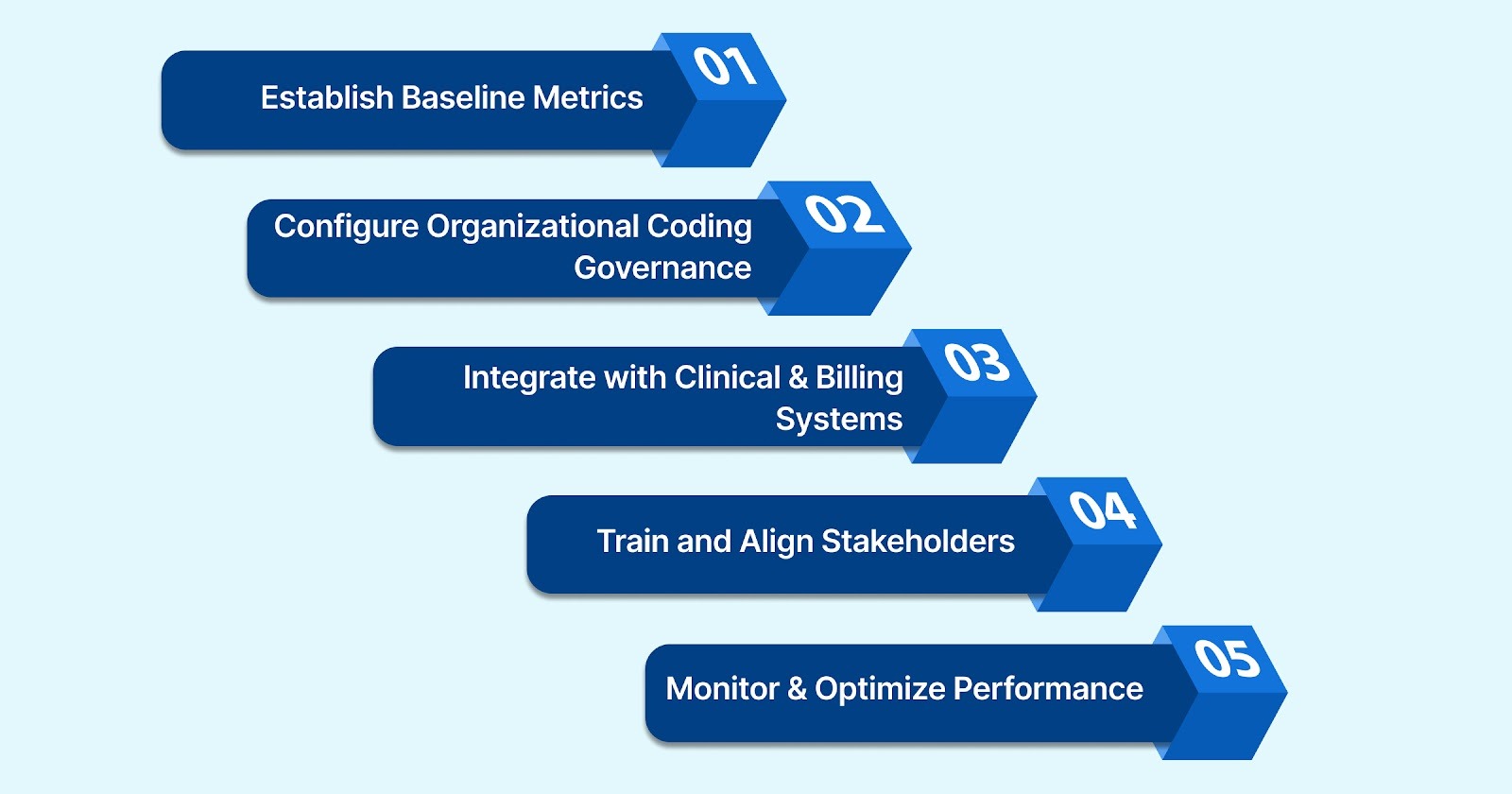
1. Establish Baseline Metrics
Before implementation, assess:
- HIV-related claim volume
- Manual coding time per encounter
- Rework frequency
- Appeal rates for historical claims
Baseline performance enables objective measurement of improvement.
2. Configure Organizational Coding Governance
Automation must reflect internal policies and payer requirements. This includes:
- Specialty-specific coding standards
- Internal compliance thresholds
- Risk-adjustment reporting protocols
- Version control for rule updates
Defined governance ensures consistency across departments.
3. Integrate with Clinical and Billing Systems
Seamless integration minimizes disruption.
Key integration priorities include:
- EHR connectivity using HL7 and FHIR standards
- Secure API connections to billing platforms
- Role-based access controls
- Encrypted data exchange
Alignment across systems supports scalable automation.
4. Train and Align Stakeholders
Even with automation, team alignment is essential.
Organizations should provide:
- Workflow training for coders and compliance teams
- Oversight dashboards for leadership
- Clear escalation pathways for exceptions
Structured training accelerates adoption.
5. Monitor and Optimize Performance
Post-deployment monitoring should track:
- First-pass resolution rates
- Coding variance trends
- Exception volume
- Turnaround time improvements
Continuous refinement ensures long-term operational stability.
Conclusion
Managing HIV-related coding under ICD-9-CM requires more than selecting the correct diagnosis code. It demands consistent classification across encounters, complete documentation, and structured validation that can withstand audits and payer review.
As screening volumes rise and legacy claims remain subject to scrutiny, manual workflows alone are no longer sufficient. AI-driven revenue cycle automation introduces standardized rule enforcement and pre-submission validation that reduces variability and strengthens operational control.
RapidClaims supports this shift by embedding intelligent coding and validation capabilities directly into existing revenue cycle workflows, helping organizations improve claim readiness while maintaining compliance alignment.
Request a demo to see how structured automation can strengthen HIV coding governance and improve revenue cycle resilience.
FAQs
Q: What is the correct ICD 9 CM code for HIV screening?
A: The correct ICD 9 CM code for HIV screening in an asymptomatic patient is V73.89. AI medical coding platforms like RapidClaims can help validate screening intent before claim submission to reduce classification errors.
Q: What is the difference between ICD-9 code 042 and V08 for HIV?
Code 042 is assigned when HIV disease or AIDS is documented by the provider. Code V08 is used when the patient is HIV-positive but does not have AIDS-defining conditions.
Q: Can HIV screening be billed without symptoms under ICD-9?
A: Yes, HIV screening can be billed without symptoms when documented as preventive or risk-based testing. The diagnosis must reflect screening intent rather than confirmed infection.
Q: Once a patient is coded with 042, can it ever be changed back to V08?
A: No, once HIV disease (042) has been documented, coding does not revert to V08 in future encounters. The historical diagnosis status remains reportable.
Q: Why are ICD-9 HIV codes still reviewed during audits today?
A: ICD-9 codes may still be examined for legacy claims, appeals, or retrospective payer audits. Accurate historical coding supports defensible reimbursement and compliance validation.


