Top 7 Strategies to Improve Clinical Documentation for 2026
Improve clinical documentation to enhance patient care and streamline workflows. Boost accuracy, compliance, and reimbursement efficiency.
Mary Degapogu
Medical Coder · RapidClaims
Published April 20, 2026Updated June 5, 2026
Healthcare providers are under constant pressure to ensure accurate and complete patient records. However, issues like mismatched data fields, blank fields, and date/time errors in electronic systems can lead to documentation errors.
Accurate and complete clinical documentation is key to delivering high-quality patient care. When healthcare providers have reliable, up-to-date information at their fingertips, they are better equipped to make informed decisions that directly impact patient outcomes.
In this article, you'll explore strategies to improve clinical documentation and the impact it has on patient outcomes.
At a glance
Clinical documentation improvement (CDI) ensures accurate, complete, and compliant patient records, directly impacting care quality and reimbursement.
Standardized workflows and AI-powered analytics help identify documentation gaps and improve coding efficiency.
Key metrics for measuring CDI success include claim denial rates, coding accuracy, and audit compliance.
Regular clinician training and interdepartmental collaboration are crucial for maintaining documentation standards.
Continuous audits and feedback loops drive ongoing improvements in documentation quality and patient care.
Table of Contents
What Is Clinical Documentation Improvement (CDI)?
Why CDI Matters: Impact on Patient Care and Clinical Outcomes
Challenges in Clinical Documentation Today
Top 7 Strategies to Improve Clinical Documentation & Patient Care
Measuring Success: Key Metrics & KPIs for CDI Programs
How RapidClaims Can Help Streamline CDI and Improve Patient Care?
Wrapping Up
FAQs
What Is Clinical Documentation Improvement (CDI)?
Clinical Documentation Improvement is a focused effort to improve the accuracy and completeness of patient records, ensuring they reflect the full scope of care provided.
CDI programs involve collaboration between healthcare providers, coders, and clinical documentation specialists to align documentation with coding standards like ICD-10 and CPT.
By improving documentation quality, CDI helps optimize reimbursement, reduce errors, and capture more accurate data for clinical decision-making.
With this foundation in mind, understanding why CDI matters becomes crucial in shaping better patient outcomes.
Why CDI Matters: Impact on Patient Care and Clinical Outcomes
Clinical Documentation Improvement is critical for improving patient care by ensuring accurate, comprehensive documentation that directly influences treatment decisions, care quality, and patient safety.
Here is why it matters:
Accurate Diagnosis and Treatment Planning: CDI ensures that all diagnoses and comorbidities are properly documented, leading to more precise treatment and better clinical outcomes.
Improved Patient Safety: Accurate documentation reduces the risk of medical errors and adverse events, aligning with HIPAA requirements for safeguarding patient data.
Optimized Reimbursement: By fully documenting services rendered, CDI ensures compliance with CMS billing guidelines, preventing claim denials and underpayment.
Regulatory Compliance: Adherence to ICD-10 and CPT standards ensures that healthcare providers meet federal and payer-specific coding regulations, avoiding penalties or audits.
Better Care Coordination: Consistent documentation across teams improves communication and continuity of care, supporting efficient patient management and improved outcomes.
With CDI's clear benefits for patient care and operational efficiency, it is important to understand the ongoing challenges in clinical documentation today.
Challenges in Clinical Documentation Today
Despite advancements in EHR systems, clinical documentation still faces significant challenges, including clinician overload, inconsistent practices, and the complexity of keeping up with regulatory requirements.
The following are some specific challenges faced by healthcare organizations:
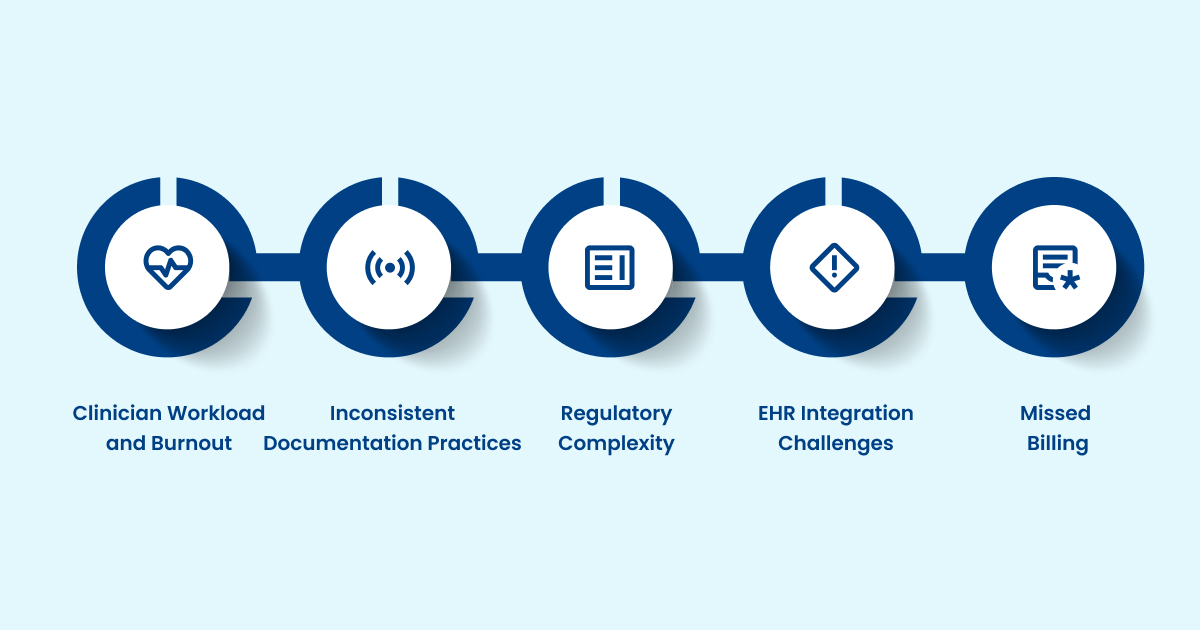
1. Clinician Workload and Burnout
Increasing patient loads and time constraints force clinicians to prioritize speed over thorough documentation, leading to missed details that impact patient care and coding accuracy.
For example, busy emergency departments often struggle to fully document comorbidities, which affects diagnosis accuracy.
2. Inconsistent Documentation Practices
Variations in how clinicians document conditions, treatments, and patient histories can result in incomplete or unclear records.
3. Regulatory Complexity
Constant updates to coding systems like ICD-10 and CPT require clinicians to stay up-to-date, creating confusion and documentation delays.
For instance, changes in ICD-10 codes for chronic conditions may lead to missed or inaccurate coding if not updated promptly.
4. EHR Integration Challenges
EHR systems often struggle to integrate seamlessly with other healthcare tools, making it difficult to capture all relevant data.
This is evident in practices where EHRs fail to connect with lab results or imaging systems, leading to incomplete patient records.
5. Missed Billing and Compliance Opportunities
Insufficient or vague documentation can lead to undercoding or improper billing, which directly impacts reimbursement.
For example, failing to document a patient's full condition in line with CMS guidelines can result in a denial of claims.
These challenges highlight the need for strategies that can streamline clinical documentation and improve the accuracy and efficiency of patient care and coding.
Top 7 Strategies to Improve Clinical Documentation & Patient Care
Effective clinical documentation plays a pivotal role in improving patient care, improving operational efficiency, and ensuring regulatory compliance.
To successfully improve clinical documentation and patient care, consider the following approaches:
1. Standardize Documentation Workflows
Creating a standardized documentation process ensures consistency, reduces errors, and increases efficiency across teams. This structured approach minimizes confusion and allows for timely, accurate documentation.
To implement standardized workflows, consider the following steps:
Create a clear protocol for chart reviews: Define when a CDI specialist should query clinicians for missing or unclear documentation.
Develop departmental-specific checklists: Create checklists personalized to specialities (e.g., cardiology, oncology) that focus on capturing critical conditions.
Establish a chart auditing schedule: Set regular audits to ensure workflows are followed and identify areas for process improvement.
2. Utilize Data Analytics for Documentation Quality
Data analytics helps identify gaps in documentation by analyzing unstructured data and tracking trends, allowing healthcare organizations to proactively address common issues and improve accuracy.
Here's how to use data analytics:
Implement AI-powered analytics tools: Use tools that flag missing diagnoses, inconsistent entries, or errors in real-time.
Track trends over time: Monitor recurring documentation gaps or coding issues, especially in departments with high complexity, like oncology.
Analyze audit results: Use audit data to identify patterns, such as common documentation mistakes, and target them for improvement.
Curious how to scale this across thousands of charts while staying compliant?
RapidClaims'RapidCode module combines AI‑driven code assignment and analytics, identifying potential documentation gaps and coding errors at scale, helping you improve documentation accuracy without manual overhead.
3. Hire and Train CDI Specialists
Having trained CDI specialists ensures that clinical documentation is accurate and aligned with coding standards.
To optimize your CDI team:
Recruit specialists with both clinical and coding expertise: Look for CDI professionals who understand both clinical care (e.g., RN, MD) and coding systems.
Provide ongoing CDI certification and training: Offer regular training on coding updates and best practices to keep your team informed.
Create role-specific training: Personalize training based on department needs (e.g., specialized training for cardiology or neurology).
4. Ongoing Staff Training and Education
Continuous education empowers clinicians to improve their documentation, ensuring it is comprehensive and accurate. This leads to better patient care and ensures proper reimbursement.
Focus training efforts on these actions:
Host monthly CDI workshops: Focus on topics like documenting multi-morbidity or acute conditions that require thorough documentation.
Distribute quick-reference guides: Provide clinicians with easy-to-follow guides on how to document common conditions, like diabetes or hypertension, accurately.
Offer real-world case studies: Share examples showing how detailed documentation affects care quality and reimbursement.
5. Encourage Collaboration Between Clinical Teams and Coders
Collaboration between clinicians and coders ensures better documentation and coding accuracy. This partnership helps catch errors early and ensures comprehensive patient records.
Encourage collaboration through these steps:
Implement joint review rounds: Schedule regular rounds where clinicians and coders review charts together to ensure completeness.
Create an efficient documentation clarification system: Set up a clear process for clinicians and coders to resolve discrepancies during patient visits.
Establish a feedback loop: Provide ongoing feedback to clinicians about common documentation gaps, such as missed comorbidities.
6. Conduct Regular CDI Audits and Provide Feedback
Regular audits help identify and address documentation errors, while feedback helps improve practices over time.
Actionable steps to implement audits:
Set up monthly or quarterly audits: Regularly audit charts to identify areas where documentation is incomplete or inaccurate.
Provide actionable feedback to clinicians: Share audit findings with clinicians, focusing on areas for improvement like chronic condition documentation.
Analyze audit results for training opportunities: Use audit trends to identify common errors and provide targeted training for specific teams.
7. Create a Clear Reporting System for CDI Progress
Tracking and reporting CDI progress allows leadership to monitor the effectiveness of documentation initiatives. Regular reports help identify areas of success and areas needing attention.
Effective reporting can be implemented with these actions:
Develop real-time performance dashboards: Track metrics like coding accuracy, denial rates, and RAF scores to measure CDI program success.
Provide quarterly progress reports to leadership: Share data and insights with leadership to highlight improvements and areas that need focus.
Use report findings to refine strategies: Adjust CDI initiatives based on performance data, such as addressing specific documentation gaps in certain departments.
Use RapidCDI to automate risk adjustment and improve your CDI reporting, all while reducing clinician burden. Learn more about RapidCDI.
To ensure that CDI strategies are achieving their desired outcomes, it’s essential to track specific metrics and KPIs that measure the effectiveness of these efforts.
Measuring Success: Key Metrics & KPIs for CDI Programs
To measure the effectiveness of CDI initiatives, it's important to track key metrics that reflect both operational efficiency and quality improvements in clinical documentation.
These metrics also align with Revenue Cycle Management (RCM) to ensure seamless reimbursement, accurate coding, and optimized financial performance.
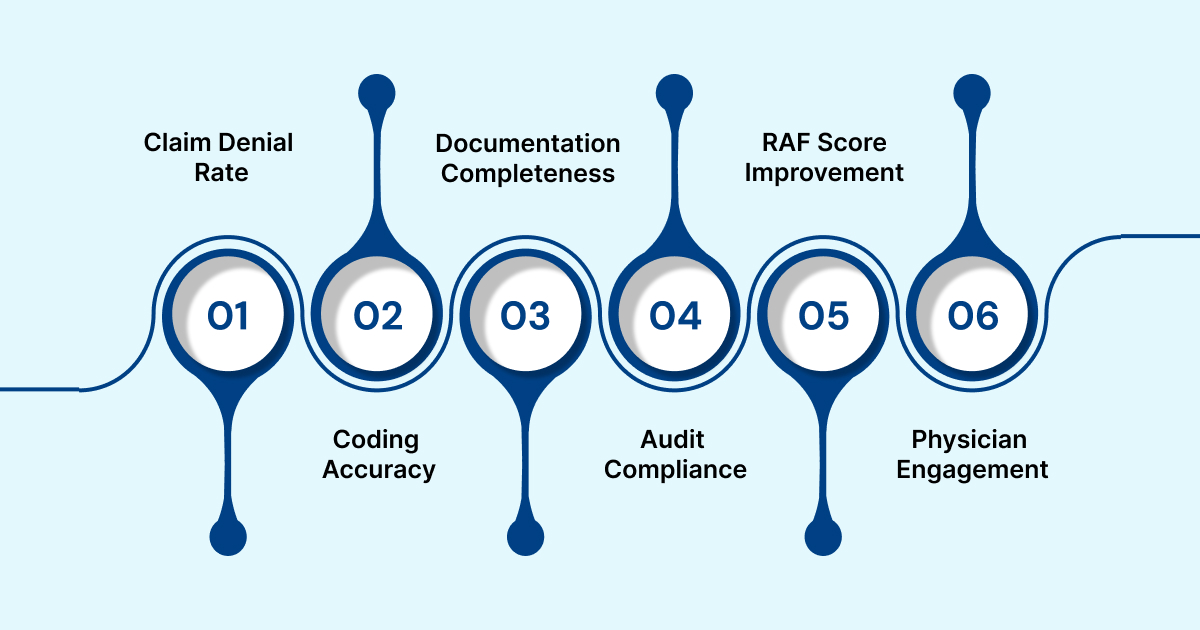
Here are the key metrics to track:
Claim Denial Rate: Measure how often claims are denied due to documentation errors and track improvements over time.
Coding Accuracy: Evaluate the accuracy of coding assignments to ensure compliance with ICD-10, CPT, and HCC standards.
Documentation Completeness: Assess the percentage of charts with fully documented diagnoses and comorbidities, ensuring no gaps in patient records.
Audit Compliance: Track audit results to ensure that documentation meets all required standards, such as HIPAA, CMS, and payer guidelines.
RAF Score Improvement: Measure the improvement in Risk Adjustment Factor scores after implementing CDI practices.
Physician Engagement: Monitor clinician participation in CDI training and their adoption of best documentation practices.
Faster Payments: Track the speed at which reimbursements are processed, noting improvements as a result of better documentation and accurate coding.
Higher Reimbursement Rates: Measure improvements in reimbursement rates, ensuring that CDI initiatives are helping healthcare providers capture all eligible reimbursements based on comprehensive documentation.
With this data, it becomes easier to identify areas for improvement and fine-tune CDI strategies.
As you measure the impact of these strategies, integrating a comprehensive solution like RapidClaims can further simplify your CDI processes and improve patient care.
How RapidClaims Can Help Streamline CDI and Improve Patient Care?
RapidClaims utilizes AI-powered solutions to automate clinical documentation and coding, ensuring accuracy, compliance, and enhanced operational efficiency.
With a clean claim rate of over 98% and 100% audit compliance, healthcare providers can optimize workflows and improve patient care outcomes.
How it helps:
Automates coding: RapidCode generates accurate ICD-10, CPT, and HCC codes automatically, reducing manual errors and ensuring proper coding.
Identifies documentation gaps: RapidAssist offers real-time suggestions to fill in missing or incomplete documentation, ensuring all relevant diagnoses are captured.
Scrubs data for compliance: RapidScrub cleans and verifies clinical data before submission, ensuring that it meets CMS and HIPAA compliance standards.
Enhances risk adjustment:RapidCDI transforms clinical documentation into precise risk scores at the point of care, reducing provider burden while improving quality measures and coding efficiency.
Using RapidClaims helps healthcare organizations maintain complete, accurate, and compliant documentation, improving revenue cycle management, operational efficiency and patient care outcomes.
Wrapping Up
Clinical documentation is essential for improving patient care by ensuring accuracy, completeness, and compliance. By adopting strategies like standardized workflows and AI-driven tools, healthcare organizations can significantly improve clinical documentation to improve patient care outcomes.
RapidClaims streamlines this process with AI-powered tools such as RapidCode, RapidCDI, and RapidScrub, ensuring accurate coding, compliance, and improved productivity across your team.
Curious to see how it works? Schedule a Free Demo today and discover how RapidClaims can boost your clinical documentation and transform patient care.
FAQs
1. Can CDI work for small clinics or only large hospitals?
Yes, CDI programs can benefit small clinics too, by improving documentation completeness and protecting against under‑coding or claim denials. Even with limited resources, a focused CDI workflow helps maintain compliance and financial integrity.
2. Does CDI slow down clinician workflow and patient care?
When properly implemented, CDI supports documentation without adding excessive burden: specialists or AI‑assisted tools can review charts in real time, reducing post‑visit corrections and letting clinicians focus on care.
3. Can CDI improve the quality of care beyond billing and reimbursement?
Yes, by ensuring all relevant diagnoses and comorbidities are documented, CDI gives clinicians a full view of patient health, which aids better treatment planning, follow‑ups, and reduces the risk of errors.
4. How often should documentation audits happen under a CDI program?
Audits should be periodic and personalized to the practice size. Many organizations schedule them monthly or quarterly to catch recurrent documentation gaps before they impact coding accuracy or compliance.
5. Is human oversight still needed when using AI‑powered CDI tools?
Yes, while AI tools can flag gaps or suggest codes, human review remains essential to interpret clinical context, make coding judgments, and ensure compliance with regulations like ICD‑10, CPT, and payer rules.
Get the next analysis in your inbox
The Revenue Cycle Briefing — operator-grade research, every other Wednesday. 12,400+ subscribers.
About the author
Mary Degapogu
Medical Coder · RapidClaims
Mary Degapogu is a proficient medical coder with 6 years of experience in E/M Outpatient and ED Profee coding, focused on precise code assignment and documentation compliance to drive clean claims and revenue integrity at RapidClaims.