Top Affordable Billing Solutions for Small Medical Practices
Streamline operations with affordable billing solutions. Boost practice efficiency, cut costs, and focus more on patient care. Get started now.
Published January 29, 2026Updated June 5, 2026
Running a small medical practice is difficult, especially when managing billing along with patient care and compliance. According to the American Medical Association (AMA), the percentage of physicians working in private practices has dropped from 60.1% to 46.7% in the last decade. This change highlights how challenging it is for small practices to stay financially secure.
Medical billing is a significant contributor to these struggles. Mistakes, inefficiencies, and delays in payment can lead to mounting frustrations and financial instability. It’s no wonder that many small practices are seeking a solution to reduce billing errors and overhead costs while still ensuring accurate and timely reimbursements.
In this blog, we’ll explore how affordable billing solutions can help small practices maintain financial health. We’ll cover the challenges small practices face with billing, how affordable solutions can address these issues, and the top billing software options to consider.
TL;DR (Key Takeaways)
Small practices face billing challenges, including errors, delayed payments, and high administrative costs.
Affordable billing solutions can reduce manual work, improve compliance, and speed up payments.
RapidClaims uses AI-driven automation to minimize errors and accelerate the billing cycle.
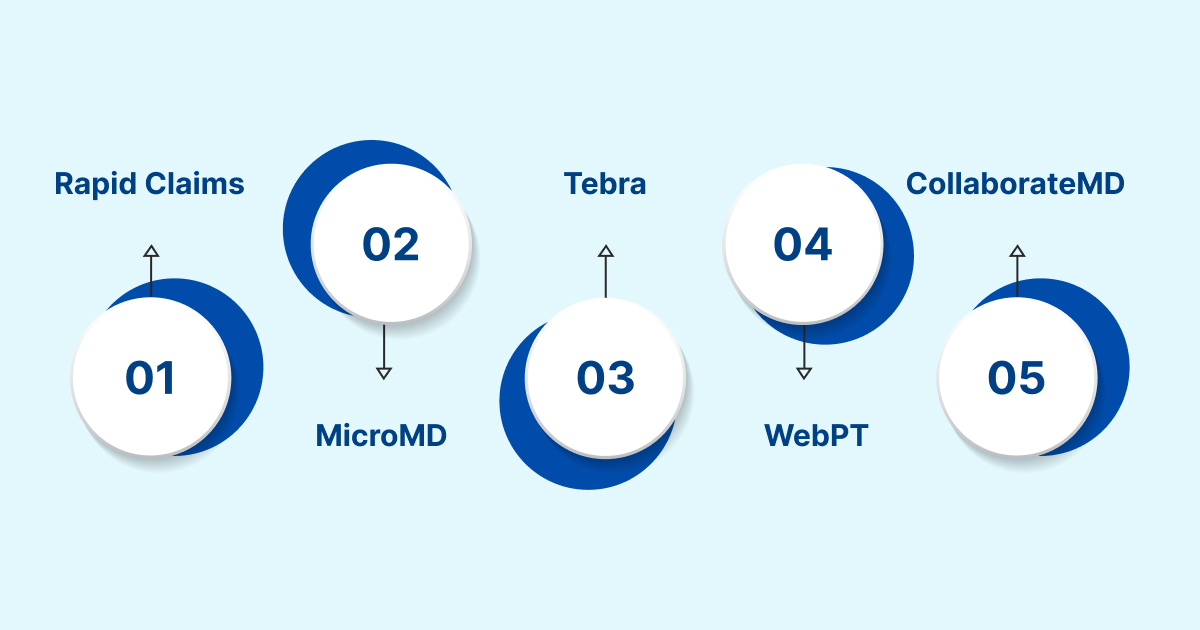
Top billing software options include RapidClaims, MicroMD, Tebra, WebPT, and CollaborateMD.
Consider factors like automation, compliance, and customization when selecting the right solution for your practice.
Table of Contents:
Challenges Faced by Small Practices
How Do Affordable Solutions Address These Challenges?
Top 5 Affordable Medical Billing Software Solutions for Small Practices
Selecting the Best Billing Solution for Your Practice
Conclusion
FAQs
Challenges Faced by Small Practices
Small medical practices often struggle with managing their billing processes, especially when resources and staff are limited. With fewer hands on deck, staying organized and compliant can feel like a constant challenge. As a result, billing mistakes and delays can disrupt cash flow and impact the overall performance of the practice.
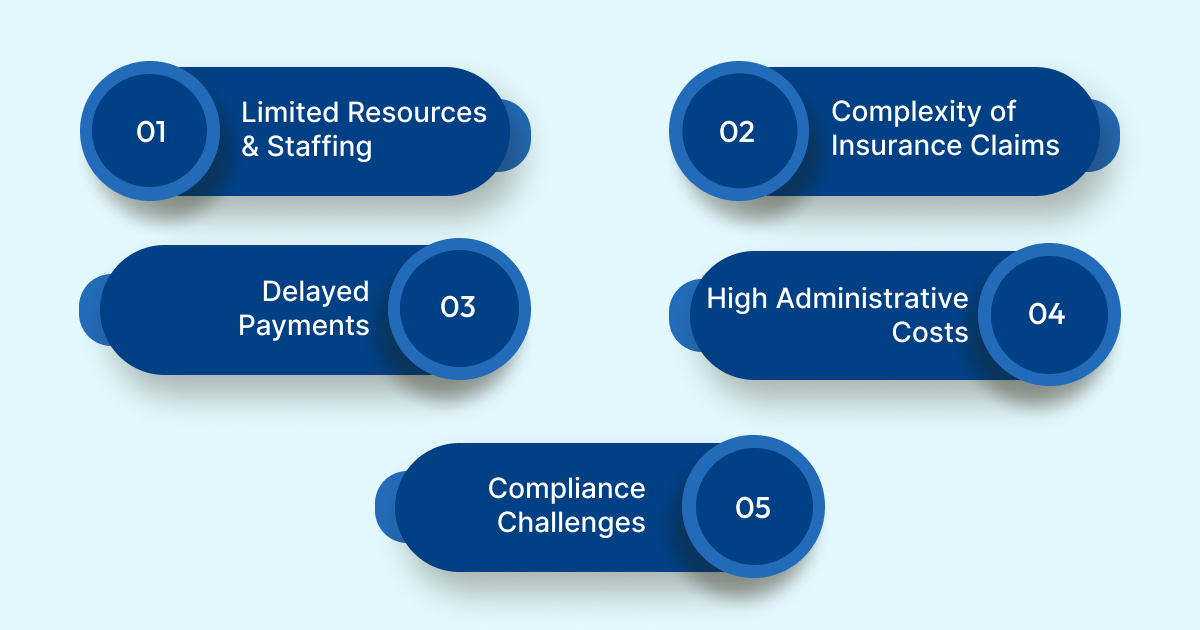
Here are some common issues small practices face with billing:
Limited Resources & Staffing: Many small practices lack dedicated billing staff, leading to increased chances of human error and time-consuming manual work.
Complexity of Insurance Claims & Coding: With insurance plans and coding guidelines constantly changing, it’s difficult for small practices to keep up and avoid costly mistakes.
Delayed Payments: Without an automated system, keeping track of payments and following up on unpaid claims can take up a lot of time, leading to delays in reimbursements.
High Administrative Costs: Small practices often spend significant amounts of time and money managing billing internally, which could be better used in other areas of the practice.
Compliance Challenges: Ensuring that billing practices comply with constantly changing regulations requires ongoing training and systems, which many small practices simply can't afford.
Now that you have a clearer picture of the challenges small practices face, it’s essential to consider how affordable billing solutions can address these issues.
How Do Affordable Solutions Address These Challenges?
Affordable medical billing solutions offer small practices an opportunity to address many of the challenges they face. These solutions automate key billing tasks, reducing the need for manual intervention and ensuring that practices can stay on top of their financials without added stress.
Below are a few ways by which affordable billing solutions can help small practices overcome common billing difficulties.
Automation of Billing Processes: Automating processes like claim submissions and payment tracking reduces the manual work involved, saving valuable time and minimizing human error.
Real-Time Claim Verification: Affordable billing solutions often include real-time insurance verification, which helps to quickly identify potential issues before submitting claims, reducing denials.
Faster Payment Processing: By automating the invoicing and payment follow-up process, practices can speed up their revenue cycle and minimize delays in receiving payments.
Reduced Staffing Needs: With automated systems in place, small practices can reduce the number of hours spent on billing tasks, cutting down on the need for dedicated billing staff.
Compliance Assistance: Many affordable billing solutions are designed to stay up to date with regulatory requirements, which helps ensure that practices remain compliant with industry standards.
With a better understanding of how affordable solutions can help tackle the challenges, it’s time to explore specific billing software options.
Top 5 Affordable Medical Billing Software Solutions for Small Practices
Selecting the right billing software is essential for small medical practices looking to improve their financial management and simplify their operations. Below are some affordable options tailored to meet the needs of smaller healthcare providers:
RapidClaims is an AI-powered medical coding platform created to simplify medical coding operations while improving billing accuracy. By automating coding tasks, RapidClaims reduces the likelihood of errors and lowers administrative costs, helping providers speed up revenue collection and reimbursement cycles.
Key Features:
AI-Powered Automation: Automates medical coding tasks, reducing manual effort and ensuring accuracy.
Natural Language Processing (NLP): Uses NLP to analyze unstructured clinical notes, automatically extracting relevant information to improve coding accuracy and reduce manual input.
Cloud-Based Billing: Offers a cloud-based platform for billing, allowing practice staff to access and manage the system from anywhere, improving flexibility and scalability.
Real-Time Insights: Provides AI-driven insights that highlight coding errors and missing documentation before claim submission, reducing denials.
Compliance: Ensures adherence to ICD-10, CPT/HCPCS, and E&M coding guidelines.
Customizable Rules: Adjusts the software to meet the unique needs of different specialties and practices.
Benefits:
Lower Claim Denials: Ensures accurate coding, leading to fewer denials and smoother claims processing.
Faster Revenue Cycles: Speeds up the billing process, handling more than 100 charts per minute.
Reduced Manual Coding: Cuts down on the need for manual input, lowering operational costs and increasing overall efficiency.
2. MicroMD
MicroMD’s practice management solution automates billing processes and revenue cycle management (RCM) with robust scheduling, registration, billing, and collection features.
Key Features:
Comprehensive RCM Tools: Offers scheduling, registration, billing, and collection features to manage the entire revenue cycle.
Patient Financial Overviews: Provides detailed patient financial information to ensure timely payments.
Insurance Eligibility Checks: Includes tools to verify insurance eligibility before services are rendered.
Benefits:
Improved cash flow through timely and accurate billing.
Enhanced patient satisfaction with clear financial information.
Reduced administrative burden with automated processes.
3. Tebra
Tebra offers a range of modules to support your practice’s billing needs, including clinical support, financial health data analysis, automated payment reminders, and more.
Key Features:
Clinical Support: Offers tools to aid healthcare providers in informed clinical decision-making.
Financial Health Data Analysis: Offers insights into the financial health of the practice.
Automated Payment Reminders: Sends reminders to patients regarding outstanding balances.
Marketing and Front-Office Tools: Provides features to help you improve your online presence and build stronger connections with your patients.
Benefits:
Improved patient engagement through automated reminders.
Enhanced financial management with data analytics.
Increased patient acquisition with marketing tools.
4. WebPT
WebPT is a leading outpatient clinical documentation software for rehabilitation therapy organizations, offering feature-rich clinical charting.
Key Features:
Clinical Charting: Provides comprehensive tools for clinical documentation.
Integrated Billing: Syncs front office, back office, and patient workflows to provide an all-in-one revenue-generating experience.
Scheduling Tools: Includes scheduling features to manage patient appointments.
Benefits:
Increased efficiency with integrated workflows.
Improved patient care through comprehensive documentation.
Enhanced revenue cycle management with integrated billing.
5. CollaborateMD
CollaborateMD is a cloud-based system that helps small practices manage both their practice operations and medical billing.
Key Features:
Appointment Scheduling: Offers easy appointment scheduling to manage patient visits.
Analytics and Reporting: Includes detailed analytics and reporting features to monitor practice performance.
Benefits:
Simplified billing processes with user-friendly tools.
Improved practice performance through detailed reporting.
Enhanced patient satisfaction with simplified scheduling.
With so many billing software options available, choosing the right one can be overwhelming. It’s essential to evaluate key factors to ensure the software aligns with your practice's specific needs.
Selecting the Best Billing Solution for Your Practice
Choosing the right billing solution for your practice requires careful consideration of your specific needs. Small practices need software that reduces errors and accelerates the revenue cycle. Key factors, such as automation, compliance, and customization, should be considered to ensure the solution enhances financial operations.
Here are some factors to consider when selecting the right billing software for your practice:
Automation of Billing Processes: Choose a solution that automates key tasks like coding, claim submission, and payment tracking to save time and reduce errors.
Compliance with Industry Standards: Make sure that the software complies with the most recent coding standards, such as ICD-10 and E&M Coding, to avoid any potential compliance issues.
Real-Time Insights and Analytics: Look for software that provides real-time insights into your billing status and identifies errors before claims are submitted.
Customization Options: A billing solution tailored to the specific needs of your practice or specialty will help achieve better outcomes with fewer issues.
Speed and Efficiency: Select a software that speeds up the billing process by handling tasks quickly, allowing you to process claims and reimbursements faster.
Cost-Effectiveness: Make sure the software offers a pricing model that fits your practice's budget while providing the features needed to improve revenue cycle management.
Considering all of these factors, RapidClaims stands out as the best option for small practices. Its AI-powered automation minimizes coding errors, improves compliance, and accelerates the billing cycle, all at an affordable price.
Conclusion
Small medical practices face many challenges when it comes to billing, from coding errors to delayed payments. By investing in an affordable billing solution, these practices can address common issues like inefficiencies, compliance risks, and high administrative costs.
RapidClaims offers a comprehensive solution, such as RapidCode to prevent claim denials, RapidScrub to recover lost revenue, and RapidCDI to turn healthcare data into actionable insights, all while ensuring compliance with industry standards and reducing operational costs.
If you're ready to take control of your practice’s billing and improve your financial health, consider RapidClaims. Contact us today to learn more about how our software can help you reduce claim denials, speed up reimbursements, and simplify your billing processes.
FAQs
1. What should small practices look for when choosing medical billing software?
Small practices should focus on features that automate billing processes, ensure compliance with industry regulations, and offer clear insights into billing status. Customization to fit specific needs and a user-friendly interface are also important.
2. Can affordable billing solutions help with insurance claim denials?
Yes, affordable billing solutions often include tools for real-time claim verification, which can identify potential issues before submission, reducing the chances of claim denials.
3. How do medical billing solutions help reduce administrative costs?
By automating key billing tasks like coding, claim submission, and payment tracking, these solutions reduce the need for manual intervention and minimize human error, leading to lower administrative costs.
4. Is it difficult for small practices to switch to a new billing software?
Switching to a new billing system can be straightforward with proper support and training. Many affordable solutions offer setup assistance, customer support, and user-friendly interfaces to make the transition easier.
5. What is the golden rule of medical billing?
The golden rule of medical billing is to "Get it right the first time." RapidClaims ensures this by automating coding and flagging potential errors before claims are submitted. This reduces denials, speeds up reimbursements, and maintains smooth cash flow for your practice.
Get the next analysis in your inbox
The Revenue Cycle Briefing — operator-grade research, every other Wednesday. 12,400+ subscribers.