Healthcare in 2025 is advancing quickly, and leaders must respond to technological, regulatory, and workforce challenges to ensure success. A recent survey revealed that 55% of U.S. healthcare workers plan to change roles within the next year. This trend emphasizes the urgent need for strategic leadership in retention and recruitment.
With such high workforce turnover, healthcare leaders must adapt to shifting circumstances. They must strike a balance between optimized processes and compassionate patient care to ensure stability and high-quality outcomes.
In this blog, you'll learn practical healthcare leadership strategies, examine challenges leaders face, and discover innovative solutions to drive organizational success and improve patient care.
TL;DR (Key Takeaway)
- Strategy & Adaptability: Leaders in 2025 need clear strategy, adaptability, and data-driven decision-making to drive outcomes.
- Patient & Team Focus: Emphasizing patient-centered care, empathy, and teamwork enhances staff performance and satisfaction.
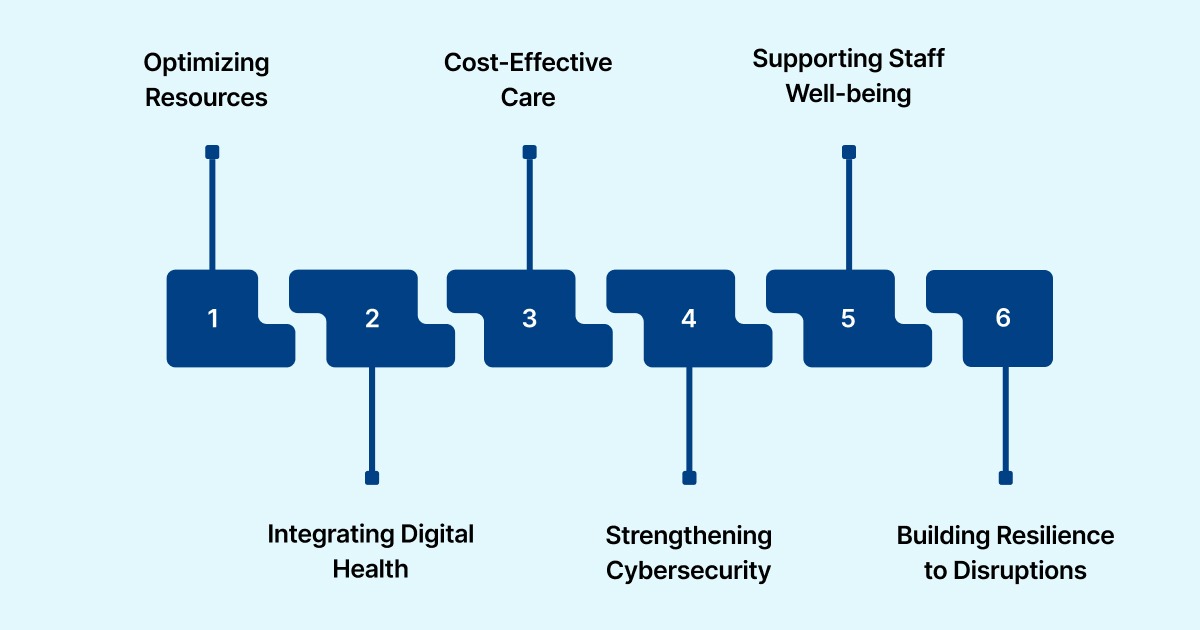
- Operational Challenges: Staff shortages, digital adoption, cost control, cybersecurity, and burnout remain critical hurdles.
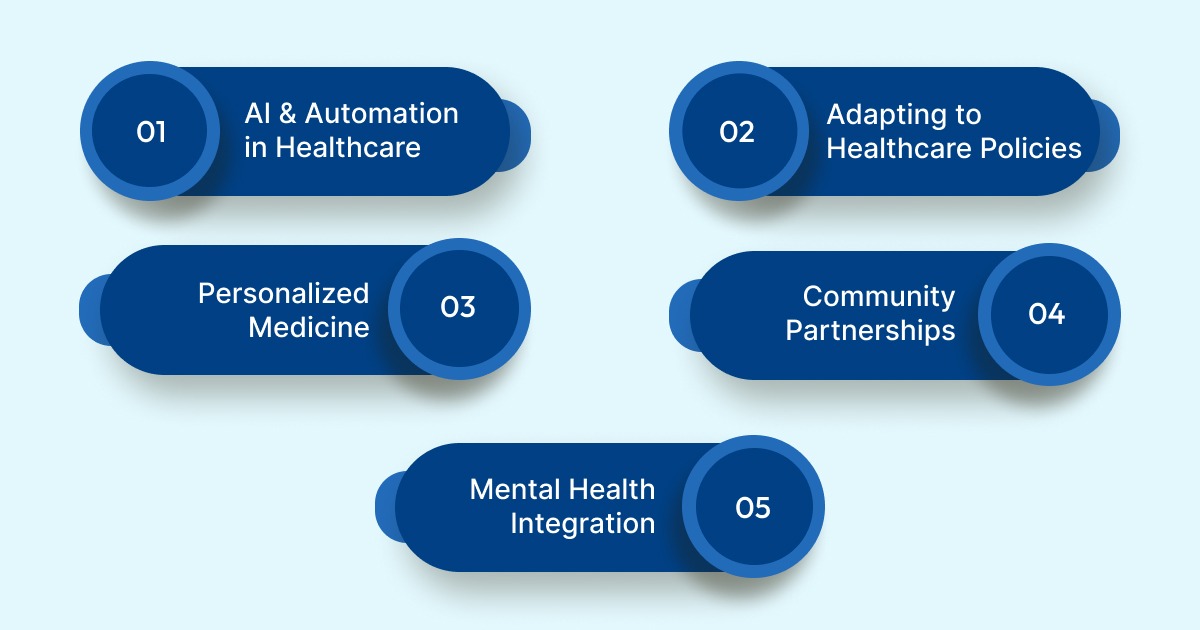
- Innovation & Efficiency: AI, personalized medicine, and community partnerships improve care quality and operational efficiency.
- Data-Driven Operations: Leveraging technology and data streamlines workflows, reduces errors, and ensures long-term organizational success.
Table of Contents:
- Why Strong Leadership Matters in Healthcare?
- Top 5 Most Impactful Healthcare Leadership Strategies in 2025
- Key Challenges and Best Practices for Healthcare Leaders
- Innovations Defining the Future of Healthcare Leadership
- Final Thoughts
- Frequently Asked Questions (FAQs)
Why Strong Leadership Matters in Healthcare?
Effective leadership is critical for guiding healthcare organizations through regulatory pressures, staffing shortages, and technological transformation. Evidence-Based Management (EBM) enables leaders to rely on data and proven practices rather than assumptions, leading to more consistent and measurable outcomes.
Alt text:Why Strong Leadership Matters in Healthcare?
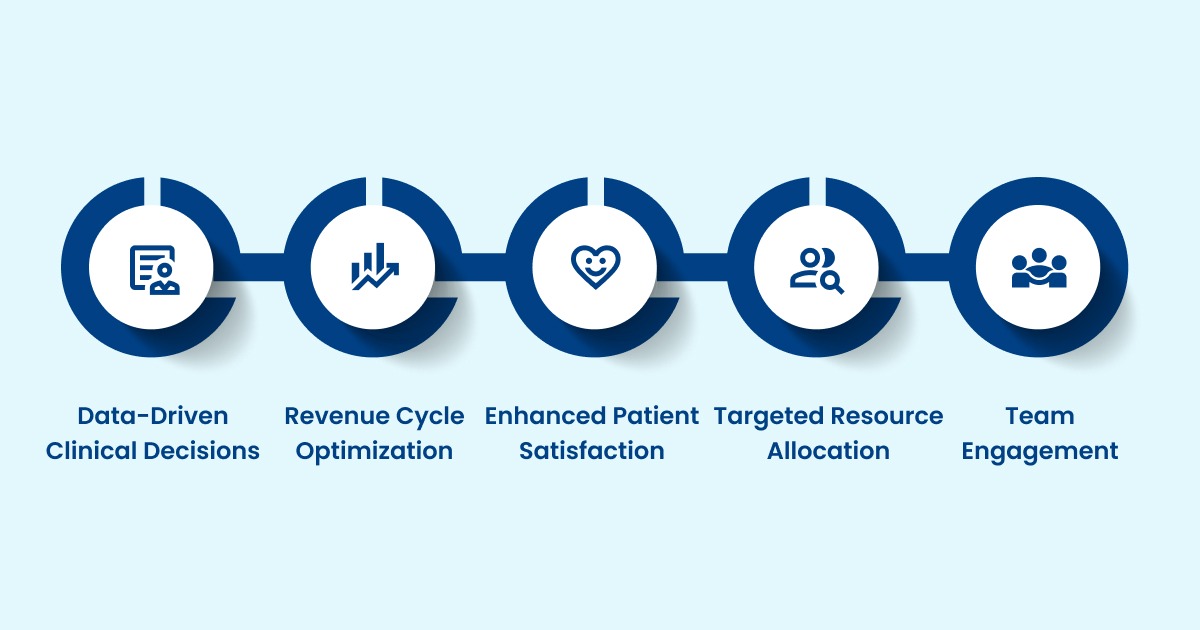
Below are a few key benefits of leadership in healthcare:
- Data-Driven Clinical Decisions: Leaders can utilize real patient outcomes and care metrics to refine and optimize treatment protocols, ultimately enhancing patient care.
- Revenue Cycle Optimization: Evidence-based approaches improve coding accuracy, reduce claim denials, and streamline billing processes.
- Enhanced Patient Satisfaction: Informed leadership ensures timely, high-quality care that effectively addresses patient needs.
- Targeted Resource Allocation: Optimizes staffing, equipment, and budget deployment based on measurable performance indicators.
- Team Engagement and Accountability: Transparent metrics and continuous feedback foster motivated, responsible, and high-performing teams.
Now, let’s explore actionable strategies healthcare executives can apply to strengthen their organizations and achieve sustainable success.
Top 5 Most Impactful Healthcare Leadership Strategies in 2025
Healthcare leadership in 2025 requires strategic vision, adaptability, and a focus on measurable outcomes. Leaders must address immediate challenges while building long-term organizational success. Strong leadership ensures staff understand their roles and drives a culture of continuous improvement.
The following key strategies demonstrate how healthcare leaders can enhance patient care, optimize team performance, and strengthen organizational resilience:
1. Prioritizing Patient-Centered Care
Placing patients at the center of decision-making improves outcomes and enhances engagement. Leaders focus on understanding patient preferences, tailoring treatment plans, and ensuring that care is consistently of high quality.
Key Practices:
- Develop individualized care plans that reflect each patient’s unique needs and requirements.
- Use data analytics to anticipate patient needs and personalize treatment.
- Implement continuous feedback mechanisms to incorporate patient input.
- Train leaders and staff to communicate patient-centered care effectively.
Case Study: Geisinger Health System - ProvenCare Program
The Geisinger’s ProvenCare initiative standardizes evidence-based practices for coronary artery bypass graft (CABG) surgery, integrating 40 verifiable best practices within the electronic health record system. This structured approach aims to improve patient outcomes and reduce variability in care delivery. The program shows improved clinical outcomes and patient satisfaction, though exact metrics on stays or costs are not provided.
2. Building a Continuous Learning Environment
Healthcare leaders must cultivate an environment of continuous learning to keep pace with the rapidly evolving field of medical knowledge and technology. Ongoing education ensures staff are equipped to deliver the latest evidence-based care.
Key Practices:
- Encourage continuous professional development and knowledge sharing.
- Implement systems for reflective practice and peer learning to foster a culture of continuous improvement.
- Utilize data analytics to identify opportunities for improvement and inform training strategies.
Case Study: Intermountain Healthcare
Intermountain Healthcare has implemented a Learning Healthcare System that utilizes patient data to drive continuous improvement. Through regular feedback loops, the organization enhances clinical decision-making, reduces readmissions, and improves patient outcomes. This approach exemplifies how data-driven practices can lead to more efficient and effective healthcare delivery.
3. CEO-Led Transformational Leadership
Transformational leaders inspire organizational change by setting a clear vision, motivating staff, and strategically aligning resources. This leadership style drives innovation, resilience, and sustained organizational performance.
Key Practices:
- Act as a change agent in adopting new care models or technologies.
- Communicate a compelling vision that motivates teams.
- Engage stakeholders across all organizational levels to support initiatives.
Case Study: Virginia Mason Franciscan Health
Virginia Mason implemented the Virginia Mason Production System (VMPS), a lean management approach that improves patient safety, reduces waste, and enhances staff engagement. Over 3,000 improvement initiatives involved staff and patients, driving significant organizational transformation.
4. Leading with Empathy
Empathetic leadership integrates emotional intelligence into decision-making across all healthcare operations. By understanding and responding to the needs of both patients and staff, leaders can improve satisfaction and foster a supportive work environment.
Key Practices:
- Conduct regular staff and patient feedback sessions.
- Create safe spaces for open dialogue to address concerns promptly. and effectively.
- Incorporate empathy into all leadership training programs.
Case Study: Children’s Hospital Los Angeles (CHLA)
CHLA's family-centered care model integrates patient and family feedback into hospital policies and processes, recognizing the family as a constant in a child's life. This approach has led to improved patient satisfaction and enhanced staff engagement, demonstrating the effectiveness of empathetic leadership in delivering compassionate care.
5. Promoting Cross-Disciplinary Collaboration
Collaboration across specialties ensures comprehensive, high-quality patient care. Leaders facilitate communication between departments, aligning goals to reduce fragmentation and improve outcomes.
Key Practices:
- Organize regular interdisciplinary team meetings.
- Establish shared goals and performance metrics.
- Provide cross-departmental training to build a deeper understanding and mutual respect.
Case Study: Interdisciplinary Collaboration in Chronic Pain Management
A qualitative study conducted in Norway explored healthcare professionals' experiences with interdisciplinary collaboration in the treatment of chronic pain. 11 professionals from 4 regional pain centres participated in semi-structured interviews. The findings highlighted that coordinated efforts among physicians, nurses, physiotherapists, and psychologists significantly enhanced care delivery. Effective communication and mutual respect were identified as crucial factors for achieving positive patient outcomes.
Building on these leadership strategies, RapidClaims utilizes AI to automate revenue-cycle management, integrating clinical data with billing workflows. Its RapidCDI module improves HCC capture by 24%, while RapidScrub reduces denials by 40%, and RapidRecovery ensures success-based claim recovery within 30 days. By minimizing manual errors and administrative burden, RapidClaims enables healthcare leaders to focus on strategic initiatives and enhance overall workflow efficiency.
Now, let’s examine the key challenges healthcare leaders face in 2025 that could affect strategy execution and results.