

Approximately 46% of hospitals and health systems currently use AI in their revenue cycle management operations. Still, many struggle to balance automation with human oversight. Without proper guidance, AI’s potential can be limited by billing and compliance complexities.
As a healthcare billing lead or compliance officer, you face constant pressure to improve accuracy and reduce costs. The challenge is combining automation with human expertise to ensure everything runs smoothly. Getting this balance right is key to long-term success.
In this blog, we’ll explore the role of Human-in-the-Loop (HITL) AI in RCM, its benefits and challenges, and how to design workflows that blend technology and human expertise.
TL;DR
- AI and Human Collaboration: HITL AI combines automation with human oversight to improve accuracy and compliance in revenue cycle management (RCM).
- Key Benefits: HITL improves coding accuracy, reduces claim denials, boosts speed, and ensures regulatory compliance.
- Challenges to Address: Issues like training, workflow delays, and data privacy concerns can be managed with smart automation rules and clear decision points.
- Designing HITL Workflows: A balanced approach defines when to use AI and when human review is needed, with feedback loops to improve performance.
- Future Trends: As AI becomes more capable, it will focus on predictive analytics and error detection, while human oversight ensures compliance.
Table of Contents:
What is Human-in-the-Loop AI in RCM?
Top Benefits of Human in the Loop AI for Healthcare RCM
Common Issues with HITL in RCM and How to Solve Them
Designing a Balanced HITL Workflow for Healthcare RCM
How to Measure the Success of HITL in RCM
The Future of HITL AI in Healthcare Revenue Cycle Management
Conclusion
What is Human-in-the-Loop AI in RCM?
Human-in-the-Loop (HITL) AI integrates human judgment into automated processes, such as coding and cloud-based billing. AI handles the tasks, while humans ensure the final output is accurate and compliant. This combination minimizes errors and ensures higher precision in healthcare operations.
Key Differences from Traditional Automation and Manual Work
Traditional automation often operates without human review, which can lead to errors, especially in complex situations. Manual work, while precise, is slow and can result in higher operational costs. HITL bridges the gap, combining the speed of AI with the reliability of human oversight.
Now that you understand the concept of HITL AI, let’s take a closer look at its practical applications in RCM.
Common HITL Applications in RCM:
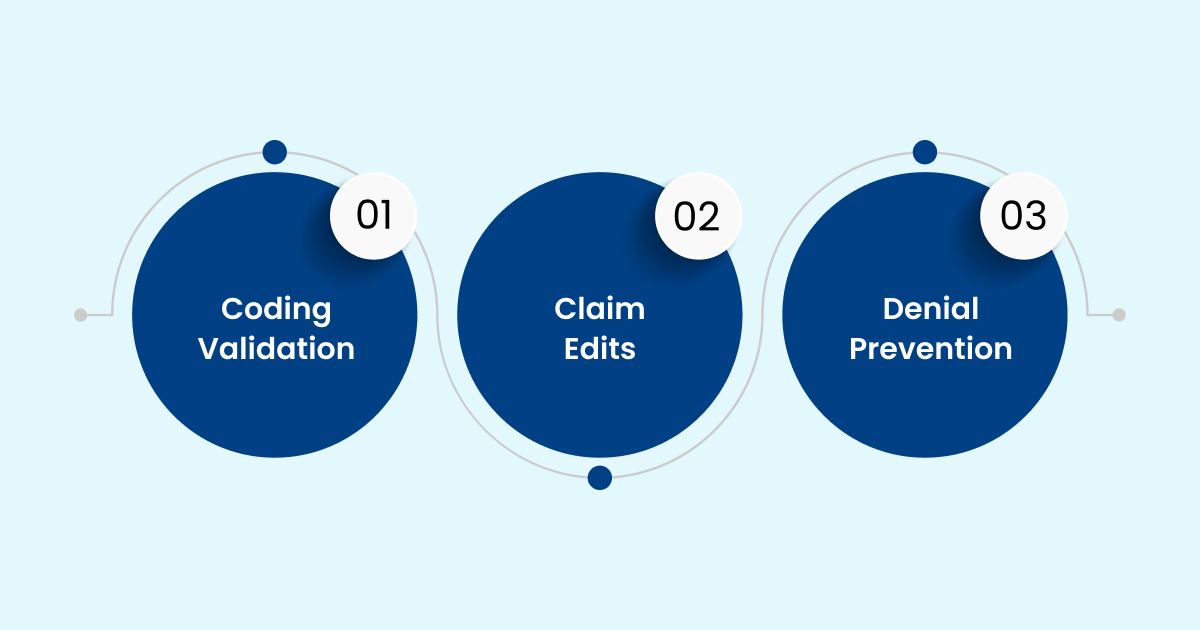
- Coding Validation: AI flags potential coding errors, while humans verify their legitimacy based on patient specifics.
- Claim Edits: AI automatically edits claims for accuracy, but human professionals ensure regulatory compliance.
- Denial Prevention: AI identifies patterns in claims denial, and humans review and apply corrective actions.
Having explored the key applications of HITL in RCM, it's important to understand the mechanics behind how these systems function.
How Human-in-the-Loop AI Works in Healthcare RCM
HITL AI in healthcare RCM combines AI automation with human oversight to improve accuracy and decision-making. Humans supervise AI-driven tasks, ensuring better outcomes in complex situations.
Here are the key processes involved:
- AI Automation
AI handles repetitive tasks like medical coding and claim reviews, speeding up workflows and reducing errors. It learns from large datasets to perform routine tasks with high accuracy.
- Coding: AI systems automatically assign codes based on clinical data.
- Claim Review: AI evaluates claims for completeness, identifying missing or incorrect information.
- Providing Labels for Training Data: Humans label data to help train AI models, ensuring accurate task execution.
- Human Checkpoints
Humans step in when the AI encounters uncertainty or complexity. This ensures that AI decisions are aligned with regulatory and industry standards.
- Flagging Uncertainty: AI flags uncertain tasks for human review.
- Complex Decisions: Humans evaluate complex cases where AI may lack sufficient data.
- Evaluating the Performance of ML Models: Humans assess the accuracy of AI predictions, providing feedback on areas for improvement.
- Feedback Loops
Human feedback improves AI decision-making. This iterative process helps AI systems become more accurate over time.
- Model Evaluation: Humans review AI outputs and suggest corrections to enhance model performance.
- Active Learning: AI selects uncertain data for human labeling, refining its learning process.
Having discussed the inner workings of HITL AI, let's move on to the specific benefits it delivers to healthcare RCM.
7 Proven Benefits of HITL AI for Healthcare RCM in 2026
HITL offers several significant advantages for RCM operations. It enhances accuracy, reduces human error, and increases productivity. By combining AI automation with human oversight, healthcare organizations can achieve greater reliability and compliance.
Here are the key benefits of implementing HITL in your RCM processes:
1. Improved Coding Accuracy: AI suggests billing codes, which are then verified by human coders, thereby reducing coding errors and ensuring accurate claims.
2. Reduced Claim Denials: With human oversight, errors that would typically lead to denials are caught early, minimizing rework and denials.
3. Increased Efficiency: Routine tasks are automated by AI, freeing up human staff to focus on higher-level decision-making and problem-solving.
4. Enhanced Compliance: Human verification helps ensure that all claims meet regulatory standards and guidelines, reducing the risk of compliance issues.
5. Better Audit Readiness: With continuous human oversight, audit trails are clear, and any issues can be flagged and resolved early.
6. Scalable Operations: HITL systems can handle large volumes of claims, allowing healthcare providers to scale operations without compromising accuracy or quality.
7. Faster Reimbursement Cycles: The combination of AI’s speed and human expertise helps improve the accuracy of submissions, speeding up reimbursement cycles.
Ready to enhance coding accuracy and compliance. Explore RapidClaims AI to see how HITL automation can transform your revenue cycle.
While HITL offers many benefits, it’s also important to address the challenges that can arise in its application.
Common Issues with HITL in RCM and How to Solve Them
While HITL offers significant benefits, it also presents challenges that healthcare organizations must address. These challenges often stem from the balance of human oversight with AI automation. However, with the right approach, these issues can be effectively managed.
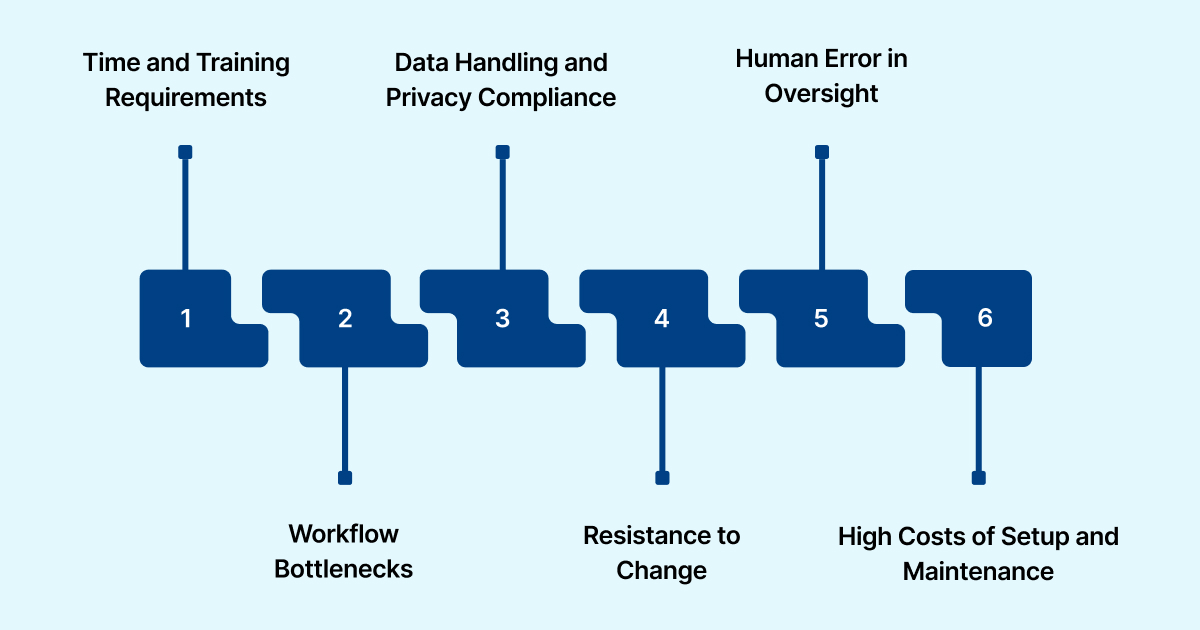
Here are some common challenges of HITL, along with solutions to overcome them:
- Time and Training Requirements
HITL systems require ongoing human involvement, which can increase time spent on tasks and require additional training for staff.
Solution: Provide comprehensive training on AI tools and ensure regular refreshers for staff to stay updated with evolving AI capabilities.
- Workflow Bottlenecks
Human checkpoints can create delays in the workflow, especially when AI systems flag a large volume of tasks for review.
Solution: Implement smart automation rules that minimize unnecessary flags and set clear criteria for when human review is necessary to prevent delays.
- Data Handling and Privacy Compliance
AI systems may process sensitive data, which can pose privacy risks if not properly managed.
Solution: Ensure strict data privacy policies and protocols are in place, and choose AI vendors who prioritize secure data handling and HIPAA compliance.
- Resistance to Change
Healthcare professionals may resist adopting AI tools due to concerns about job displacement or lack of trust in automation.
Solution: Address concerns through communication and training that emphasize AI as a tool to support, not replace, human roles in RCM processes.
- Human Error in Oversight
While HITL aims to reduce coding errors, humans still have the potential to miss key details or make mistakes during review.
Solution: Implement double-check systems or peer reviews for critical decision points to ensure accuracy and reduce the chance of errors in human oversight.
- High Costs of Setup and Maintenance
Initial setup costs for HITL systems can be high, and ongoing maintenance may require additional resources.
Solution: Start with small pilot projects to demonstrate value before scaling and consider cost-sharing strategies with AI vendors to reduce financial burden.
With the challenges in mind, let's explore how to create a balanced workflow that maximizes both automation and human oversight.
Designing a Balanced HITL Workflow for Healthcare RCM
Creating a balanced HITL workflow involves combining the strengths of both AI automation and human expertise. AI handles routine tasks while humans focus on areas that require judgment or oversight. This balance ensures accuracy and reduces errors.
Here are key strategies to build a balanced HITL workflow:
- Define Clear Automation Rules: Set specific guidelines for which tasks can be fully automated and which require human oversight.
- Set Decision Points for Human Review: Identify points in the workflow where human intervention is essential, such as complex claims or ambiguous data.
- Integrate AI into Existing Systems: Ensure that AI tools can work smoothly with current RCM systems to avoid disrupting operations or causing confusion.
- Automate Repetitive Tasks: Use AI to automate time-consuming tasks such as coding and claim review, while leaving complex tasks for human professionals.
- Create Escalation Paths: Set up procedures for when human intervention is needed, such as in the case of flagged claims or coding discrepancies.
- Track and Analyze Workflow Performance: Continuously monitor the efficiency of the workflow, identify bottlenecks, and adjust as needed to improve speed and accuracy.
- Provide Training and Support: Ensure that staff are well-equipped to use the AI tools effectively and are aware of when to step in for review.
- Establish Feedback Loops: Continuously refine AI performance through feedback from human reviews, ensuring better decision-making in future tasks.
With a solid HITL workflow, it’s time to focus on evaluating its performance and measuring success in your RCM operations.
How to Measure the Success of HITL in RCM
Measuring the success of HITL systems is essential to ensure they deliver the intended benefits. By tracking the right metrics, organizations can evaluate both the performance of AI and the effectiveness of human oversight. Regular measurement ensures continuous improvement and helps identify areas for further optimization.
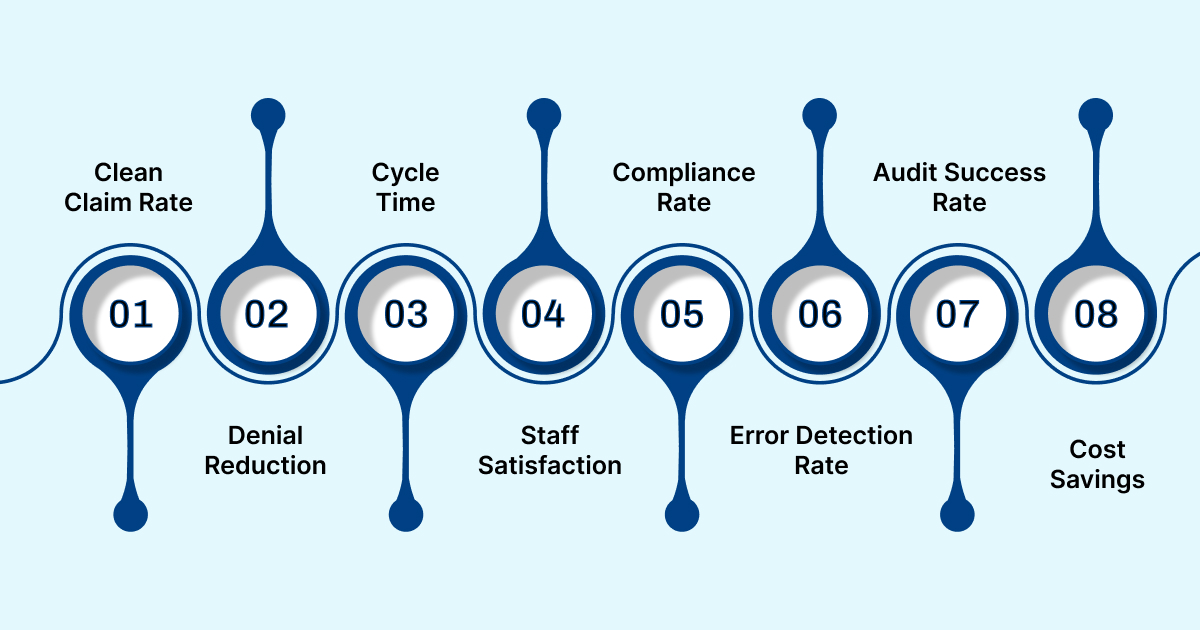
Here are the key metrics to measure the success of HITL in RCM:
- Clean Claim Rate: Track the percentage of claims that are submitted without errors and require minimal adjustments after human review.
- Denial Reduction: Measure the decrease in claim denials due to the combined efforts of AI and human oversight, which improves accuracy.
- Cycle Time: Monitor how quickly claims are processed, from submission to payment, to ensure efficiency without compromising accuracy.
- Staff Satisfaction: Evaluate how well employees adapt to working with AI tools and whether they feel supported in their roles.
- Compliance Rate: Track the percentage of claims that meet all regulatory requirements after human verification, ensuring compliance is maintained.
- Error Detection Rate: Measure the effectiveness of AI in identifying errors before human intervention, reflecting the system’s accuracy.
- Audit Success Rate: Monitor how well the organization performs in audits, with HITL systems ensuring a higher level of accuracy and documentation.
- Cost Savings: Evaluate the reduction in operational costs due to the automation of routine tasks and fewer errors, leading to rework.
Having seen the current impact of HITL, let’s now look ahead to how it will continue to shape RCM processes.
The Future of HITL AI in Healthcare Revenue Cycle Management
The future of HITL AI in healthcare revenue cycle management promises to balance human expertise with automation, enhancing the accuracy and effectiveness of tasks like medical coding and claims processing. As AI systems become more capable, the focus will shift to human oversight, ensuring that critical decisions align with healthcare regulations and industry standards.
Here are the key trends that will define this shift:
- Increased Automation: As AI tools like RapidCode, which powers medical coding to prevent denials, become more accurate, automation will take on more tasks, with human oversight focused on critical decision-making.
- AI-Driven Predictive Analytics: AI will increasingly predict issues before they arise, allowing healthcare providers to address problems proactively, with human intervention when necessary.
- Expanded Human Roles in AI Supervision: Human experts will transition from direct coding work to overseeing AI systems like RapidScrub, which helps prevent and recover from denials, ensuring decisions remain aligned with regulatory standards.
- Improved AI Learning: AI systems will continuously improve through feedback from human validation, making them more accurate and reliable over time, much like how RapidCDI transforms data into valuable revenue intelligence.
- Hybrid Models for Complex Tasks: More complex tasks in RCM will involve both AI and human expertise, providing a more balanced and effective solution for difficult cases.
- Smarter Error Detection: AI will become better at detecting errors earlier in the process, allowing human experts to focus on resolving these issues swiftly.
- Enhanced Collaboration Between Teams: AI and human teams will work more closely together, with clearer communication channels and better integration into existing workflows.
- Greater Regulatory Compliance: As AI improves, HITL systems will offer more robust compliance checks, helping to meet complex healthcare regulations with greater accuracy.
With HITL technology on the rise, tools like RapidClaims AI will provide you with greater control over RCM processes, helping to optimize outcomes and meet your team's needs more effectively.
Conclusion
Human-in-the-Loop AI is essential for balancing automation with accuracy in healthcare revenue cycle management. It ensures better decision-making, compliance, and error reduction while maintaining human oversight in critical areas.
To improve your RCM process, try integrating HITL technology. RapidClaims AI offers a solution that combines automation with the necessary human touch. Try RapidClaims today to enhance your operations.
FAQs
1. What types of healthcare organizations benefit most from HITL AI in RCM?
HITL AI is particularly useful for healthcare organizations dealing with high volumes of claims, complex billing, and strict regulatory requirements. Hospitals, medical practices, and large health systems can significantly benefit from combining automation with human expertise in these areas.
2. How can I determine when to use AI vs. human intervention in RCM?
Typically, AI can handle repetitive, high-volume tasks such as coding or claim reviews. At the same time, human involvement is necessary for complex cases that require judgment, interpretation of ambiguous data, or decision-making in compliance-related matters.
3. Is there a risk that HITL AI will lead to job loss in the healthcare industry?
HITL AI is designed to support rather than replace human workers. It enhances their ability to perform tasks more accurately and efficiently, allowing staff to focus on higher-level duties like decision-making, problem-solving, and customer care.
4. What are the key indicators that a HITL system is working effectively?
Key performance indicators include improved claim accuracy, fewer denied claims, faster reimbursement cycles, high compliance rates, and overall satisfaction from staff working with the system.
5. Can HITL AI be integrated with existing RCM systems?
Yes, many HITL AI solutions are designed to integrate with current RCM platforms without disrupting operations. The systems can be adapted to work with existing tools for coding, billing, and claims management, enhancing the overall workflow.


