Epic for Small Practices: What it Costs and What it Offers
Discover how Epic for small practice enhances patient records, streamlines workflows, ensures security, and supports practice growth. Click to learn more!
Muyied Ulla Baig
Medical Coder · RapidClaims
Published March 6, 2026Updated June 5, 2026
In 2024, Epic Systems dominated the U.S. acute care market with 42.3% of hospitals and 54.9% of beds, setting the standard for advanced clinical workflows, interoperability, and reliable customer support. While Epic is best known for powering some of the largest healthcare systems, it also offers customized solutions, such as Community Connect and Garden Plot, for smaller providers.
Independent medical practices are now exploring whether adopting Epic EMR for small practices can improve efficiency, patient safety, and compliance, without overwhelming budgets. This blog breaks down the cost of Epic EMR, explains different Epic pricing models, and examines whether Epic is truly practical for small and independent practices.
TL;DR (Key Takeaways)
Epic Garden Plot offers a simplified EMR for small practices with essential features at a lower cost.
Setup costs range from $10,000 to $50,000; monthly fees are $2,000 to $10,000 based on users and features.
Pricing depends on practice size, chosen modules, customization, workflow setup, and data migration.
Epic centralizes patient records, supports compliance, and enables care coordination across facilities.
Epic for Healthcare: What it is and Why you can consider it
Epic is a software company that develops EMR systems, enabling hospitals, clinics, and healthcare organizations to manage patient medical records digitally. Its platform allows healthcare providers to document patient encounters, track clinical care, schedule appointments, order tests, process prescriptions, and manage billing within a single system. By replacing paper charts with a unified digital record, Epic EMR improves workflow efficiency, reduces errors, and ensures accurate patient documentation.
Key Highlights:
EMR Focused: Centralizes patient medical records within clinics and small practices, simplifying access, documentation, and daily workflows.
Interoperability: Shares patient data across systems, enabling coordinated and informed care.
Market Presence: One of the leading EMR providers in the U.S., used by both large and small healthcare organizations.
Let’s take a closer look at how Epic EMR costs vary by practice size to understand what fits different healthcare providers’ budgets and needs.
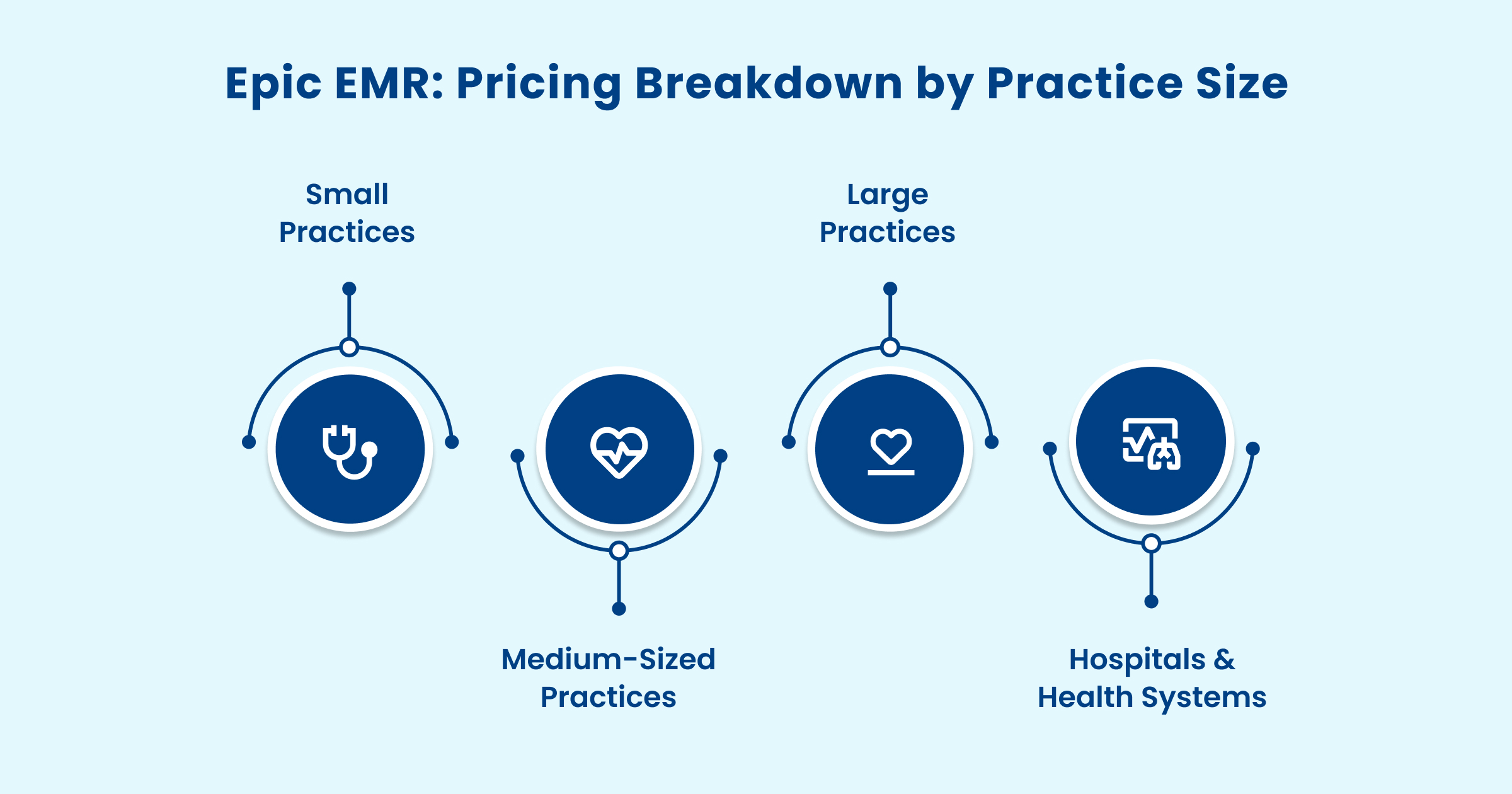
Epic EMR: Pricing Breakdown by Practice Size
The cost of implementing Epic varies significantly depending on the size of the practice or hospital, making it essential to consider both budget and operational needs:
1. Small Practices (1–5 Physicians)
Epic is generally not recommended for very small practices due to its high cost and complexity, stemming from extensive customization requirements, advanced modules designed for large workflows, and significant IT infrastructure needs.
2. Medium-Sized Practices (6–20 Physicians)
The first-year implementation cost ranges from $30,000 to $70,000 per physician, depending on the specific modules and customization required.
3. Large Practices (21–100 Physicians)
Costs typically range from $20,000 to $50,000 per physician in the first year, influenced by selected clinical modules, customization levels, and integration with existing systems. Larger teams can sometimes achieve better per-physician pricing due to economies of scale.
4. Hospitals and Health Systems (100+ Physicians)
Enterprise implementations can be costly, with first-year costs ranging from $70 million to $200 million or more, depending on the size of the facility, number of modules, and level of system integration.
Small practices can further benefit from integrating RapidClaims with Epic Garden Plot to enhance revenue cycle efficiency. The platform offers AI-driven automation, processing over 100 charts per minute while reducing manual errors and claim denials by up to 70%. Its seamless compatibility with EHRs, HL7, FHIR, and billing systems ensures smooth integration without disrupting existing workflows.
Epic for Small Practices: The Garden Plot Solution
Recognizing that independent practices have limited resources and simpler operational needs, Epic offers Epic Garden Plot, a streamlined version of its enterprise EMR. It provides essential functionalities while avoiding the complexity, high cost, and extensive IT requirements of full-scale Epic implementations.
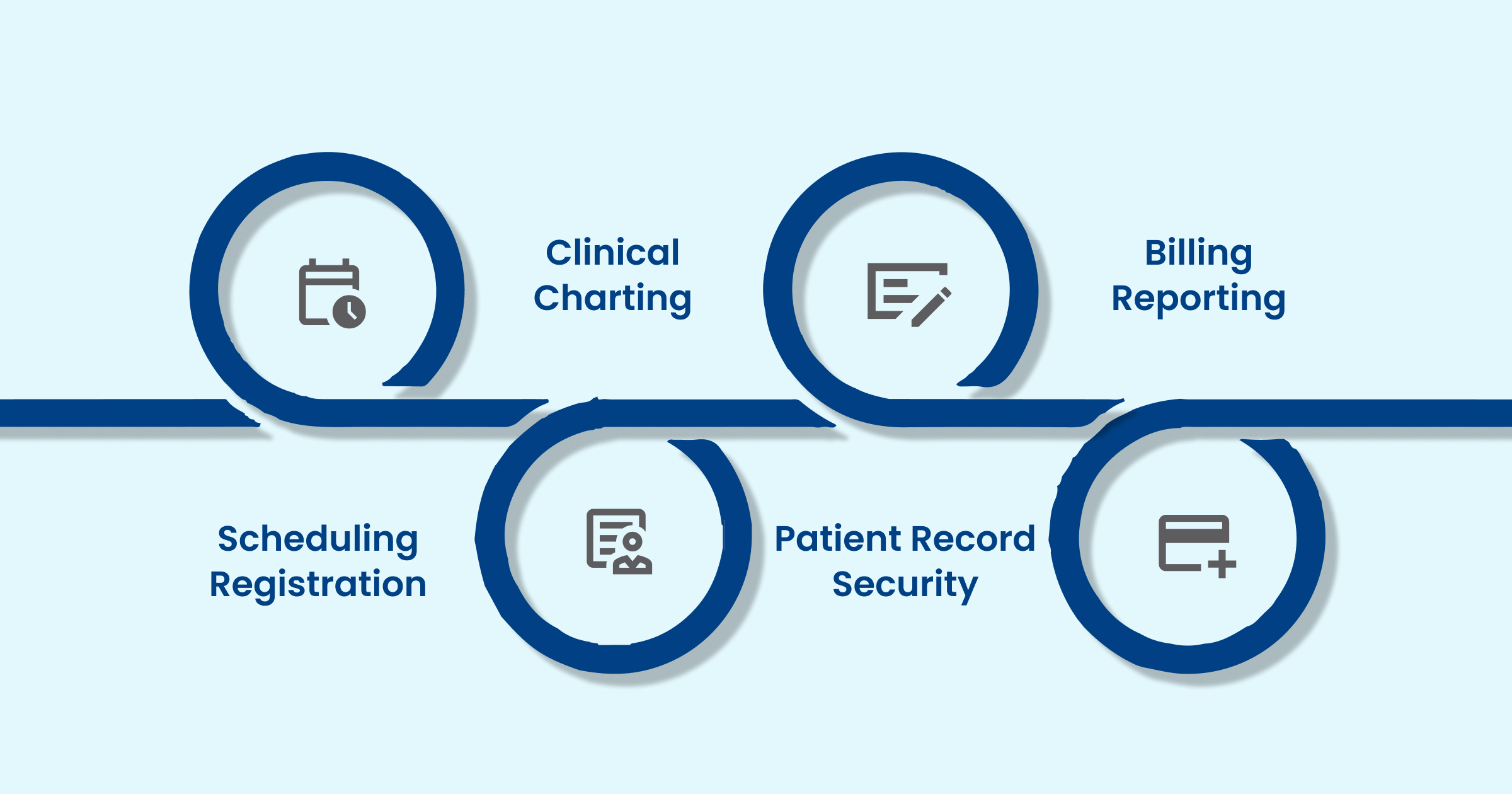
Here are a few key features of Epic Garden Plot:
Patient Scheduling and Registration: Enables clinics to manage appointments efficiently, reduce no-shows, and track patient intake. Automated reminders and workflow tools optimize front-desk operations.
Clinical Documentation and Charting: Simplified digital charts enable clinicians to record patient encounters quickly and accurately, thereby reducing paperwork and enhancing decision-making.
Secure Patient Record Management: Maintains HIPAA-compliant storage with controlled access, ensuring patient confidentiality while enabling secure internal sharing within the practice.
Basic Billing and Reporting Modules: Supports invoicing, insurance claims, and essential analytics, helping small practices manage revenue cycles without requiring a dedicated billing team.
Cost of Epic EMR for Small Clinics:
Setup Cost: $10,000 to $50,000, varying with practice size, selected modules, and initial configuration requirements.
Monthly Fees: $2,000 to $10,000, depending on user count, features, and optional support services.
By offering a scaled-down, customized approach, Epic Garden Plot makes the cost of Epic EMR more manageable for small healthcare providers. It delivers reliable performance, streamlined workflows, and essential clinical tools, enabling single-specialty clinics, primary care providers, or small group practices to adopt a professional-grade EMR without unnecessary complexity or excessive overhead.
Since ongoing expenses are just as necessary as initial setup, let’s break down what small practices can expect in monthly Epic EMR costs.
Monthly Costs of Using Epic EMR for Small Practices
For small practices, the cost of implementing Epic EMR varies based on factors such as practice size, selected features, and deployment options. According to the available reports, Epic EMR costs can range from $1,200 to $500,000, depending on the specific requirements and scale of the practice.
Additional Costs
Training: The average cost of Epic software training is approximately $2,000.
Support & Maintenance: Ongoing support and maintenance fees are typically 15–20% of the annual licensing cost.
While Epic EMR offers robust features and interoperability, it's essential to assess whether the system aligns with your practice's needs and budget. For smaller practices, exploring alternative EMR solutions with lower costs and simpler implementations might be beneficial.
While cost is the most significant factor, practices must also understand the elements that influence these prices before committing to Epic.
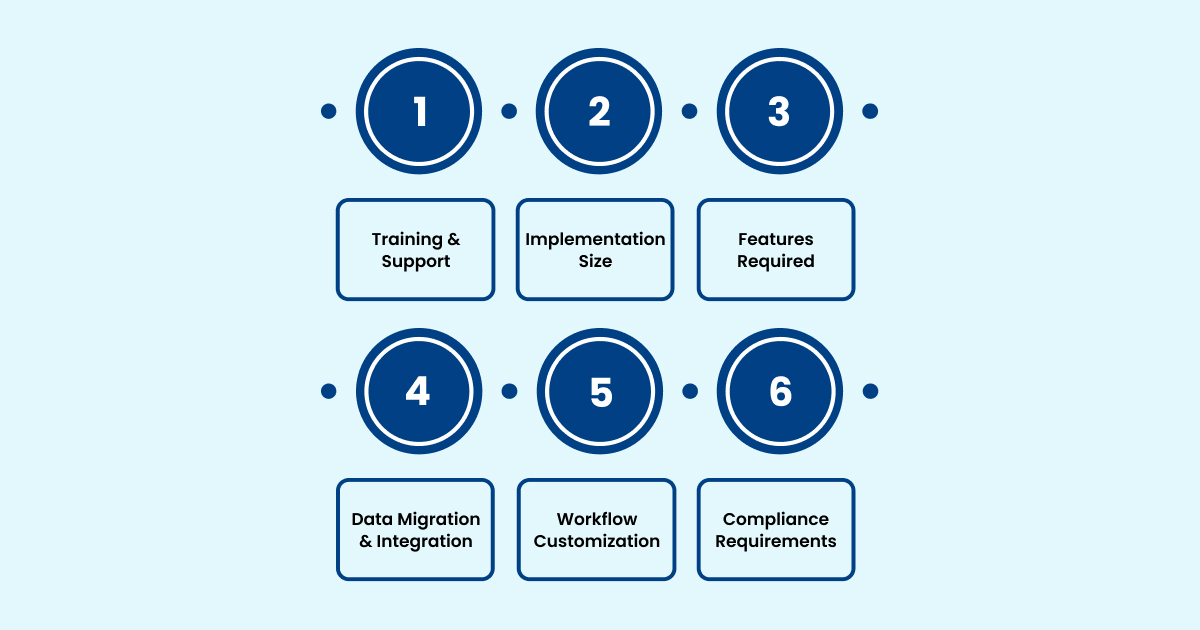
Factors That Impact Epic Pricing for Small Practices
The cost of Epic EMR for small practices depends on several interrelated factors, each influencing the total investment required for a successful implementation.
Training & Support: Initial staff training is essential for smooth adoption, while ongoing technical support ensures the system runs efficiently. Both of these services contribute to the overall cost.
Implementation Size: The scale of the practice matters; solo or two-physician clinics generally incur lower costs, whereas multi-specialty groups with more users face higher expenses due to additional licenses and setup requirements.
Features Required: The number and complexity of modules selected significantly affect pricing. Advanced analytics, specialty-specific workflows, or integrated patient engagement tools increase the overall investment.
Data Migration & Integration: Moving legacy patient records from older systems and integrating Epic with existing billing, lab, or pharmacy software can add substantial costs. Complexity increases if data cleanup or custom interfaces are needed.
Customization & Workflow Configuration: Customizing Epic to match a practice’s unique workflows, templates, and reporting needs can further influence pricing. More customization typically leads to higher setup costs.
Regulatory Compliance Needs: Practices requiring additional compliance features for HIPAA, state-specific reporting, or quality metrics may face extra fees.
These variables explain why some small practices may spend closer to $10,000 upfront, while others may exceed $50,000, depending on the level of customization, features, and integrations required. Understanding these factors helps small practices plan budgets accurately and choose the right Epic configuration for their needs.
Although Epic’s complexity and costs remain significant considerations for small practices, RapidClaims can complement the system by handling coding and billing tasks. By automating medical coding, detecting errors before claim submission, and ensuring compliance with ICD-10, CPT, HCPCS, HCC, andE&M guidelines, RapidClaims helps practices reduce claim denials and optimize the revenue cycle.
Is Epic EMR a Viable Investment for Independent Practices?
Epic EMR is widely recognized for its reliability, scalability, and ability to streamline internal workflows, making it a strong choice for clinics that need comprehensive medical record management. For independent or small practices, however, adopting Epic EMR requires careful consideration of both benefits and costs, as the system may offer more features than some small clinics actually need.
Benefits for Small Practices
Small practices can streamline operations and maintain accurate patient records. It also supports future growth and easier collaboration with other facilities, as highlighted in the following key advantages.
Centralized Patient Record Management: All patient information is stored in a single, secure platform, reducing errors and streamlining workflows.
Enhanced Data Accuracy and Compliance: Built-in checks and standardized documentation help maintain HIPAA compliance and improve clinical data quality.
Care Coordination Across Facilities: If patients visit multiple providers or transfer to larger hospitals, Epic ensures seamless access to their medical history.
Professional Support and Regular Updates: Small practices benefit from Epic’s structured support ecosystem, including training resources, troubleshooting, and timely feature upgrades.
Challenges for Small Practices
Implementation can be costly and time-consuming for small teams. Additionally, some advanced features may remain underutilized, creating challenges that are explained in the points below.
High Upfront and Ongoing Costs: Implementation and monthly fees are substantial compared to other EMRs, which can strain smaller budgets.
Training and Adoption Time: Staff must be trained extensively; initial productivity may decrease as teams adapt to the system.
Excess Features for Small Teams: Some modules and workflows designed for large hospitals may be unnecessary, adding complexity without immediate benefit.
Conclusion
For small practices that prioritize long-term growth, interoperability, and regulatory compliance, Epic offers a robust solution with enterprise-level reliability and scalability. Conversely, clinics seeking rapid deployment, minimal customization, or lower costs may benefit more from simpler, more affordable EMRs.
To further optimize operations, RapidClaims, an AI-driven medical coding automation platform, integrates seamlessly with existing healthcare systems, including Epic. By automating coding and streamlining revenue cycle management, practices can reduce claim denials, accelerate reimbursements, and free up more time for patient care.
Ready to enhance your Epic EMR with smarter medical coding and faster revenue cycles? Request a Free Demo to see the RapidClaims platform in Action.
Frequently Asked Questions (FAQs)
1. Can I get support from Epic if I face technical issues in a small practice?
A. Yes. Epic provides dedicated support services for small practices, including remote troubleshooting, user guides, and access to a community of clinicians using the same system. This ensures your practice can resolve issues quickly without significant disruptions.
2. Can Epic EMR generate reports for practice performance analysis?
A. Absolutely. Epic offers reporting tools that allow small practices to analyze appointment trends, revenue cycles, patient outcomes, and staff productivity, helping clinicians make data-driven decisions.
3. Can I scale Epic EMR if my practice grows over time?
A. Yes. Epic is highly scalable. Independent practices can start with essential modules and expand to include more advanced features or additional users as the clinic grows, without switching systems.
4. Can Epic EMR support multiple specialties in a single small practice?
A. Yes. Even for independent multi-specialty clinics, Epic can manage patient data across specialties, ensuring coordinated care, shared records, and consistent workflows without duplicating efforts.
5. Can I access Epic EMR remotely for telehealth or off-site work?
A. Yes. Epic supports secure remote access, allowing providers to review patient records, update charts, or conduct telehealth visits while maintaining compliance with privacy regulations.
Get the next analysis in your inbox
The Revenue Cycle Briefing — operator-grade research, every other Wednesday. 12,400+ subscribers.
About the author
Muyied Ulla Baig
Medical Coder · RapidClaims
Muyied Ulla Baig is a dedicated medical coder with 1 year of experience in E/M Outpatient, HCC, and Dental coding, supporting accurate risk adjustment and claims integrity through detailed and compliant coding processes at RapidClaims.