

Employee engagement in healthcare is trending, with the 2024 average score reaching 4.04 out of 5, up from 4.02 the previous year. This modest improvement highlights a gradual, positive shift, but there is still room for healthcare organizations to strengthen staff engagement.
Disengagement among nurses, medical coders, revenue cycle managers, and compliance officers can lower productivity, increase claim errors, and heighten compliance risks. Enhancing engagement in these roles is crucial for delivering high-quality patient care, ensuring audit readiness, and maintaining workflow efficiency.
In this blog, you will learn what employee engagement in healthcare is, why it matters, common challenges, practical strategies to improve it, and mistakes to avoid.
TL;DR (Key Takeaway)
- Impact of Engagement: Employee engagement in healthcare enhances patient outcomes, reduces errors, and strengthens revenue cycle performance.
- Common Barriers: Burnout, insufficient recognition, limited career growth, poor leadership, and outdated technology hinder engagement.
- Effective Strategies: Recognition programs, professional development, transparent communication, flexible schedules, and AI-powered automation boost engagement.
- AI-Driven Support: Tools like RapidClaims empower staff, automate coding and auditing, reduce errors, and allow focus on high-value tasks.
- Avoiding Pitfalls: Ignoring feedback, overloading staff, relying on generic solutions, inadequate leadership training, and neglecting metrics can undermine engagement.
Table of Contents:
- What is Employee Engagement?
- Why Employee Engagement Matters in Healthcare?
- Common Barriers to Employee Engagement in Healthcare
- Top 10 Strategies to Improve Employee Engagement in Healthcare
- Common Mistakes to Avoid in Employee Engagement
- Conclusion
- Frequently Asked Questions (FAQs)
What is Employee Engagement?
Employee engagement in healthcare is more than job satisfaction; it reflects the emotional commitment employees feel toward their organization’s mission and their role in delivering patient care. Engaged employees:
- Take initiative in improving workflows and patient outcomes.
- Adhere strictly to compliance protocols, such as HIPAA and CMS regulations.
- Actively participate in audits and quality improvement programs.
- Collaborate effectively with cross-functional teams, including revenue cycle, coding, and compliance departments.
Let's explore why employee engagement is particularly important in healthcare.
Why Employee Engagement Matters in Healthcare?
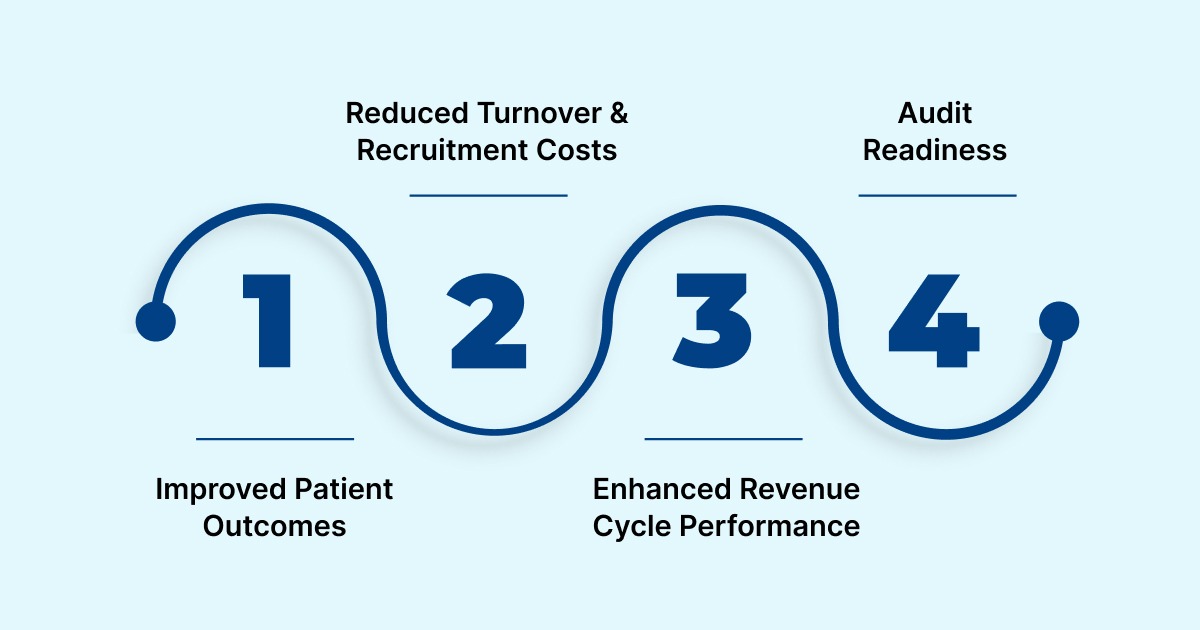
Healthcare organizations rely heavily on skilled staff to deliver accurate, timely, and compliant patient care. Employee engagement drives:
Alt text:Why Employee Engagement Matters in Healthcare?
- Improved Patient Outcomes: Engaged nurses, physicians, and administrative staff make fewer errors, follow clinical protocols diligently, and maintain consistent patient communication.
- Reduced Turnover and Recruitment Costs: Disengaged employees leave more frequently, resulting in hospitals incurring substantial expenses on recruitment, onboarding, and training.
- Enhanced Revenue Cycle Performance: Engaged coders and billing specialists reduce claim denials, accelerate reimbursement, and improve financial stability.
- Audit Readiness: Engaged teams maintain accurate documentation, comply with CMS and HIPAA audits, and minimize regulatory penalties.
While engagement brings significant benefits, healthcare organizations face unique challenges that hinder engagement. Let’s explore common reasons for poor employee engagement in the healthcare industry.
Common Barriers to Employee Engagement in Healthcare
The demanding nature of clinical and administrative roles often challenges employee engagement in healthcare. High patient volumes, strict compliance requirements, and complex workflows can leave staff feeling stressed, undervalued, or unsupported.
To effectively improve engagement, it is important to first recognize the specific barriers that prevent employees from performing at their best:
- Burnout and Fatigue: Long hours, emotional stress, and understaffing contribute to exhaustion among nurses and administrative staff, reducing focus and productivity.
- Inadequate Recognition: A lack of meaningful feedback or acknowledgment can erode morale, particularly for behind-the-scenes roles like coders or compliance officers.
- Limited Career Advancement: Few opportunities for skill development, certifications, or promotions can lead to employees feeling stagnant and disengaged.
- Ineffective Leadership: Poor communication, unclear expectations, and limited managerial support weaken trust and confidence in supervisors.
- Rigid Work Schedules: Inflexible shifts or lack of scheduling options negatively impact work-life balance, increasing absenteeism and turnover.
- Insufficient Tools and Technology: Outdated EHR systems, manual coding processes, or inefficient workflows frustrate staff, slow operations, and increase the risk of errors.
Healthcare-specific challenges, such as navigating HIPAA compliance, ICD-10 coding, and CMS audits, further increase disengagement when employees feel unsupported. Solutions like RapidClaims address these issues by automating coding, denial prevention, and documentation. With 96 %+ accuracy and audit-ready workflows, staff can focus on higher-value tasks, improving productivity, engagement, and operational performance.
Also Read: How to Choose the Right Practice Management System for Medical and Legal Workflows
Now, let’s explore practical strategies that healthcare organizations can implement to address these barriers and actively enhance employee engagement across clinical and administrative teams.
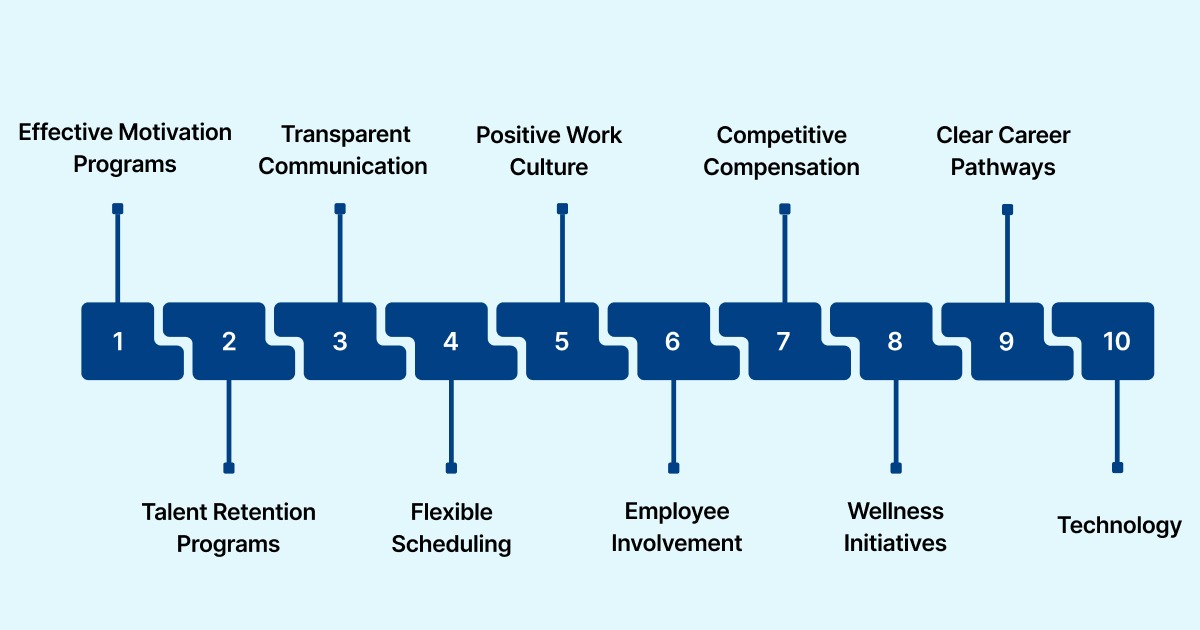
Top 10 Strategies to Improve Employee Engagement in Healthcare
Enhancing employee engagement in healthcare necessitates targeted, role-specific initiatives. Structured programs, clear communication, and automation can reduce burnout, increase productivity, and support nurses, coders, revenue cycle managers, and compliance staff.
Alt text: Top 10 Strategies to Improve Employee Engagement in Healthcare
The following strategies outline practical steps to achieve measurable engagement improvements:
1. Recognition Programs That Truly Motivate
Recognition goes beyond saying “thank you”; it motivates employees and reinforces behaviors that directly impact patient care and operational efficiency.
How to Implement Recognition:
- Celebrate coders who maintain high accuracy or consistently reduce claim denials.
- Recognize compliance officers for proactive audit preparation or error-free compliance reporting.
- Utilize digital platforms, dashboards, or internal newsletters to publicly showcase achievements.
- Ensure recognition is specific, timely, and measurable, linking it to tangible outcomes like reduced denials or faster claim processing.
2. Professional Development Opportunities That Retain Talent
Structured learning empowers staff, reduces turnover, and enhances performance in complex healthcare roles.
How to Support Professional Growth:
- Offer CME credits, workshops, or clinical training for healthcare providers.
- Provide coding certifications (CPC, COC) and advanced ICD-10/CPT training for medical coders.
- Leadership or audit-focused training for revenue cycle and compliance managers.
- Align development programs with KPIs such as claim accuracy, denial reduction, and audit readiness.
3. Transparent Communication That Builds Trust
Open, frequent communication builds clarity, trust, and engagement by connecting daily work to organizational goals.
How to Maintain Transparency:
- Share team dashboards that display metrics such as coding accuracy, denial rates, and audit outcomes.
- Conduct weekly huddles to review CMS updates, policy changes, and compliance alerts.
- Clarify how each role contributes to patient outcomes, revenue cycle efficiency, and regulatory compliance.
- Encourage two-way feedback to address challenges and collect improvement suggestions.
4. Flexible Scheduling to Reduce Burnout
Flexible scheduling supports work-life balance, reduces fatigue, and maintains high performance in demanding roles.
How to Implement Flexibility:
- Offer staggered or rotating shifts for coders, revenue cycle, and compliance teams.
- Offer remote options for tasks such as compliance reviews or reporting.
- Balance staff availability with operational needs to prevent workflow disruptions.
- Consider personal responsibilities and preferences to enhance engagement and retention.
5. Positive Work Culture That Inspires Collaboration
A collaborative and inclusive culture improves morale, quality, and adherence to compliance.
How to Build a Positive Culture:
- Facilitate interdisciplinary meetings between clinicians, coders, and compliance officers.
- Promote inclusion through mentorship, team-building, and recognition of diverse contributions.
- Encourage knowledge-sharing to solve complex claims, coding, or audit challenges.
- Reinforce policies and procedures in a supportive environment to reduce errors.
6. Employee Involvement That Drives Ownership
Involving employees in decisions increases accountability, process ownership, and engagement.
How to Involve Staff:
- Include coders and revenue cycle managers in workflow redesign and EHR upgrades.
- Engage compliance officers in audit planning and regulatory updates to ensure effective compliance.
- Gather feedback to identify bottlenecks and improve coding accuracy and claim efficiency.
- Empower staff to participate in decisions, turning them into strategic contributors.
7. Competitive Compensation That Rewards Performance
Fair and transparent compensation motivates employees to maintain high performance.
How to Align Compensation:
- Benchmark salaries and benefits for coders, compliance officers, and clinical staff against industry standards.
- Link performance metrics, such as claim accuracy, audit compliance, and patient outcomes, to bonuses or incentives.
- Clearly communicate pay structure and growth opportunities.
- Ensure compensation reflects value and reduces turnover risk.
8. Wellness Initiatives That Prevent Burnout
Supporting mental and physical health keeps staff engaged and productive.
How to Support Wellness:
- Offer counseling, resilience workshops, and stress management programs.
- Conduct ergonomic assessments for coders and revenue cycle staff.
- Provide wellness initiatives for clinicians managing high-stress patient care.
- Reduce fatigue to maintain focus, efficiency, and overall job satisfaction.
9. Clear Career Pathways That Retain Talent
Defined advancement opportunities motivate employees to grow within the organization, fostering a culture of growth and development.
How to Create Career Growth:
- Outline promotion tracks for coders, compliance officers, revenue cycle staff, and clinicians.
- Include milestones like advanced certifications, audit leadership, or management roles.
- Make career paths visible, structured, and tied to measurable performance.
- Provide clarity on long-term growth to increase retention and engagement.
10. Technology That Empowers Staff
AI and automation reduce repetitive tasks, improve accuracy, and free employees to focus on high-value work.
How to Use Technology Effectively:
- Deploy Solutions like RapidClaims for coding automation, claims review, and compliance checks.
- Utilize dashboards to monitor audit readiness and track error reduction.
- Train staff to ensure smooth adoption and reduce resistance.
- Free employees to focus on complex cases, process improvements, and strategic initiatives.
Healthcare teams can significantly improve engagement and efficiency by leveraging RapidClaims’ AI-powered platform. RapidCode delivers a 170 % productivity lift for coders with 96 %+ accuracy, while RapidScrub reduces denials by 40 % and accelerates A/R by five days. RapidCDI increases HCC capture by 24 % and saves physicians 30 minutes per day, reducing administrative burden and burnout. These measurable improvements enable staff to focus on higher-value tasks, enhance job satisfaction, and ensure compliance.
Also Read: Guide to Evaluation, Management, and Medical Billing Coding Services
Even with strong strategies, some approaches can backfire. Let’s look at mistakes healthcare organizations should avoid.
Common Mistakes to Avoid in Employee Engagement
Even well-intentioned engagement programs can fail if key errors are made. Recognizing these mistakes allows healthcare leaders to implement strategies that effectively support nurses, coders, revenue cycle managers, and compliance officers.

Alt text:Common Mistakes to Avoid in Employee Engagement
Below are the most critical mistakes to avoid:
- Ignoring Employee Feedback: Collecting surveys or feedback is ineffective if no action is taken. Employees need to see that their input leads to tangible changes in workflows, recognition, or support.
- Overloading Staff: Assigning excessive tasks without adequate resources or support leads to burnout and disengagement. Overloaded employees are more likely to make errors and experience job dissatisfaction.
- Poor Leadership Training: Leaders who lack essential skills in communication, coaching, and team management can have a negative impact on morale and engagement. Well-trained leaders are crucial in guiding staff, resolving conflicts, and maintaining a motivated workforce.
- One-Size-Fits-All Solutions: Generic engagement initiatives fail to address the unique needs of clinical, coding, or administrative staff. Programs should be tailored to each role to improve relevance and effectiveness.
- Neglecting Metrics: Failing to track engagement regularly prevents organizations from identifying gaps or measuring success. Surveys, retention rates, error rates, and audit findings should be monitored to inform improvements.
Healthcare-specific mistakes, such as ignoring compliance challenges or failing to streamline revenue cycle processes, can directly reduce engagement and increase the risk of audit failures.
Conclusion
Employee engagement in healthcare is not optional; it is essential. Engaged employees reduce errors, improve patient satisfaction, streamline revenue cycles, and maintain audit compliance. Without it, hospitals face higher turnover, slower claim processing, and compliance risks.
RapidClaims helps healthcare teams tackle these challenges head-on. By utilizing AI-driven coding, audit, and compliance solutions, organizations can enhance efficiency, accuracy, and employee satisfaction.
Ready to transform your healthcare operations and enhance employee engagement? Request a free demo today and experience how RapidClaims can empower your staff and optimize your revenue cycle.
Frequently Asked Questions (FAQs)
Q1. How can I, as a medical coder, stay engaged in a high-pressure healthcare environment?
A. Set clear, measurable goals aligned with team objectives to maintain focus. Seek regular feedback, pursue ongoing training, and use workflow automation solutions to reduce repetitive tasks. Focusing on high-value coding work increases efficiency and job satisfaction.
Q2. I manage a revenue cycle team; how can I tell if engagement is low?
A. Look for indicators such as rising claim denials, delayed A/R, frequent errors, absenteeism, and turnover. Regular surveys with actionable follow-ups can identify specific areas that require support, process improvements, or training.
3. How can I balance patient care and documentation demands without losing engagement?
A. Use AI-assisted documentation and coding solutions to reduce manual work. Prioritize tasks based on patient impact, collaborate with coders and compliance teams, and leverage dashboards to monitor workflow efficiency and reduce burnout.
4. I lead a remote healthcare team; how can I implement recognition programs effectively?
A. Use digital dashboards, newsletters, or virtual meetings to publicly highlight achievements. Recognize specific contributions, such as accurate coding or timely audit preparation. Encourage peer-to-peer recognition and celebrate milestones to maintain motivation and connection.
5. How can I use automation to keep compliance staff engaged and reduce burnout?
A. Automate routine compliance checks and audit preparation to lower administrative burden and errors. Real-time dashboards and predictive alerts allow staff to focus on high-value tasks, improving performance, satisfaction, and regulatory compliance confidence.


